
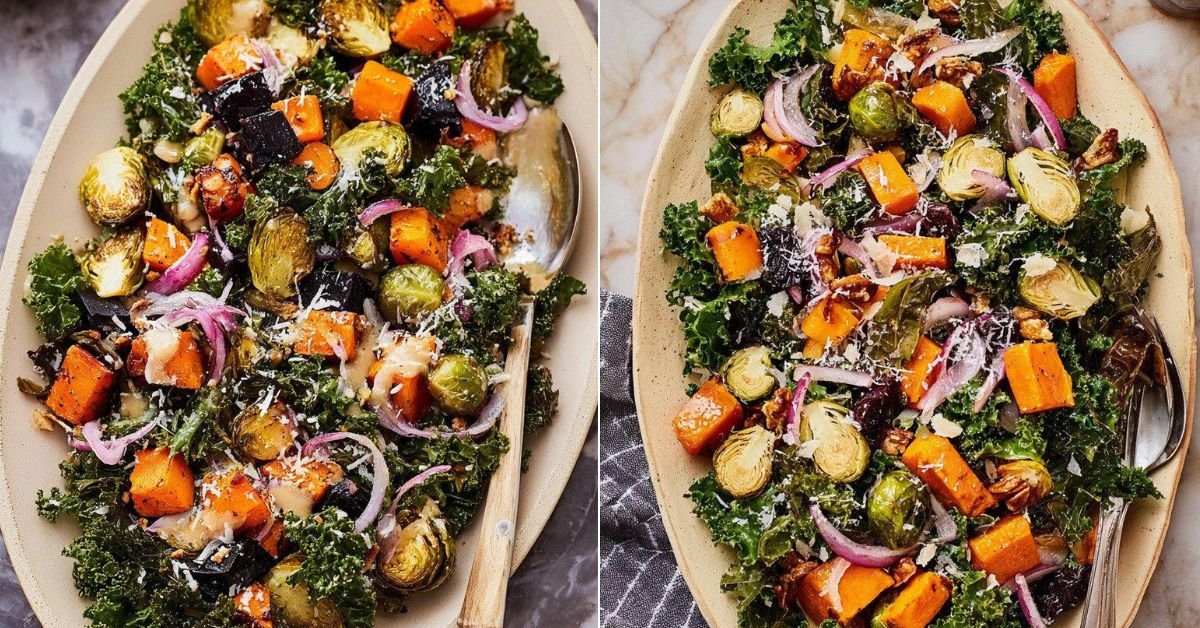
1) What Makes This Warm Roasted Veggie Salad Work
Tough kale and soggy roasted vegetables can ruin a salad before the dressing even touches the bowl. I’m Kathy, and after testing this roasted veggie salad through a few underwhelming batches, I learned the turning point was timing: warm vegetables, properly massaged kale, and a balanced maple Dijon vinaigrette. One early version tasted flat because the vegetables were crowded and the dressing was too sharp. Once I gave the sweet potato and Brussels sprouts room to caramelize, the whole salad felt cozy, bright, and calming enough for a fall family dinner.
Table of Contents
- 1) What Makes This Warm Roasted Veggie Salad Work
- 2) Key Takeaways
- 3) Easy Warm Roasted Veggie Salad with Maple Dijon Vinaigrette Recipe
- 4) Why Most Warm Roasted Veggie Salad with Maple Dijon Vinaigrette Recipes Fail
- 5) Ingredients for Warm Roasted Veggie Salad with Maple Dijon Vinaigrette
- 6) How to Make Warm Roasted Veggie Salad with Maple Dijon Vinaigrette
- 7) Recipe Card: Warm Roasted Veggie Salad with Maple Dijon Vinaigrette
- 8) Tips for Making Warm Roasted Veggie Salad with Maple Dijon Vinaigrette
- 9) Common Mistakes & Fixes
- 10) How to Tell Warm Roasted Veggie Salad Has the Right Texture
- 11) Professional Secrets Behind Better Warm Roasted Veggie Salad
- 12) Best Dishes or Pairings to Serve With Warm Roasted Veggie Salad
- 13) Making Warm Roasted Veggie Salad Ahead of Time
- 14) Storing Leftover Warm Roasted Veggie Salad
- 15) FAQ (Real Cooking Questions)
- 16) Save This Warm Roasted Veggie Salad with Maple Dijon Vinaigrette Recipe
- 17) Conclusion
- 18) Nutrition
2) Key Takeaways
- A strong roasted veggie salad depends on dry, evenly cut vegetables so they roast instead of steam.
- Massaging kale with a small pinch of salt softens the fibers and prevents a tough, chewy salad base.
- The maple Dijon vinaigrette works because sweetness, acidity, mustard, garlic, and thyme balance the earthy roasted vegetables.
- The salad is best tossed while the vegetables are warm, but not dripping hot, so the kale softens without collapsing.
3) Easy Warm Roasted Veggie Salad with Maple Dijon Vinaigrette Recipe
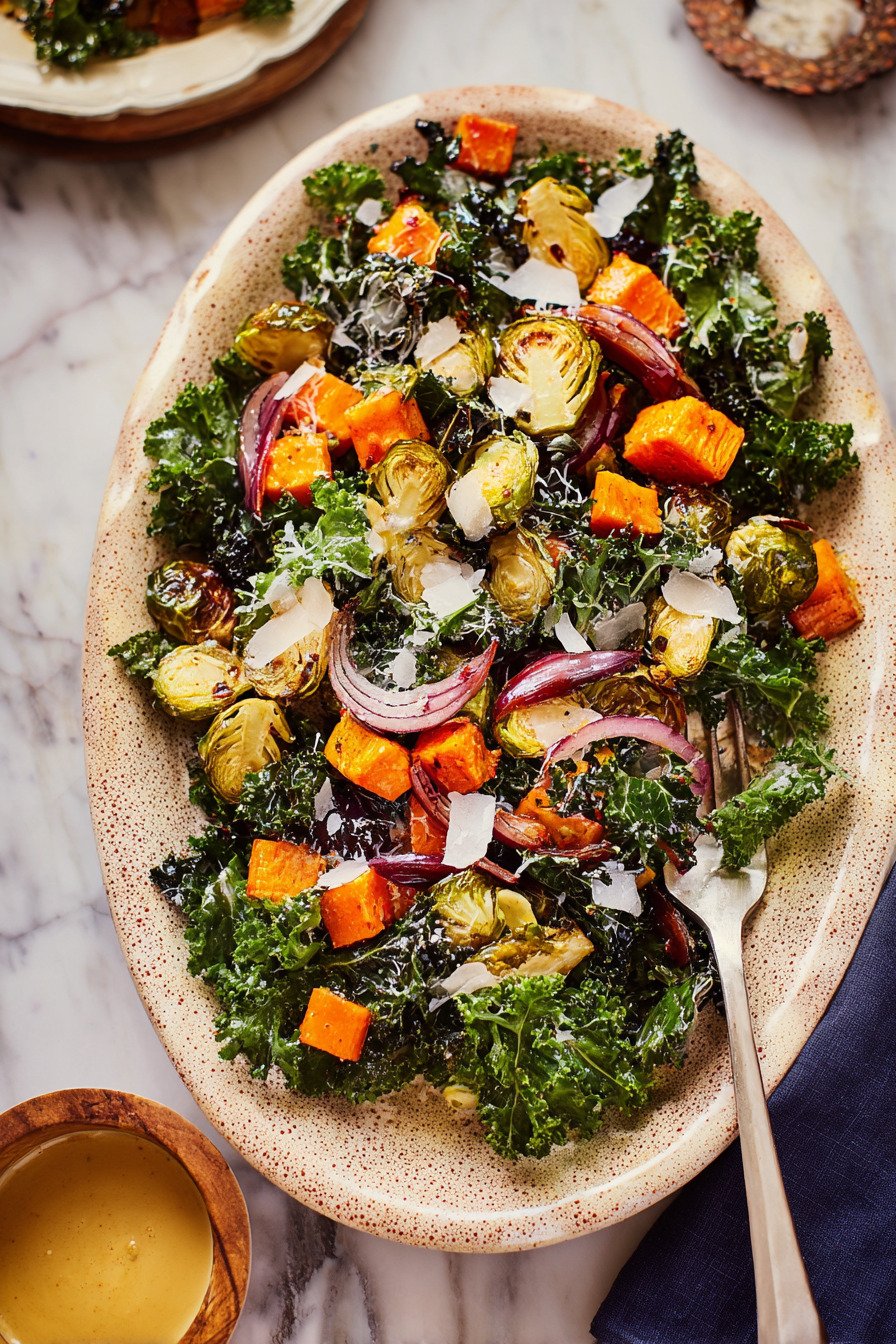
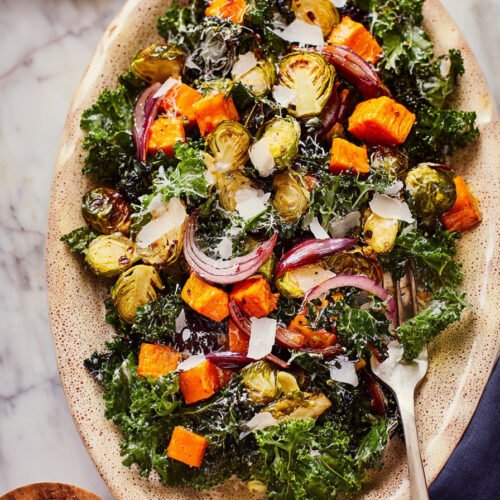
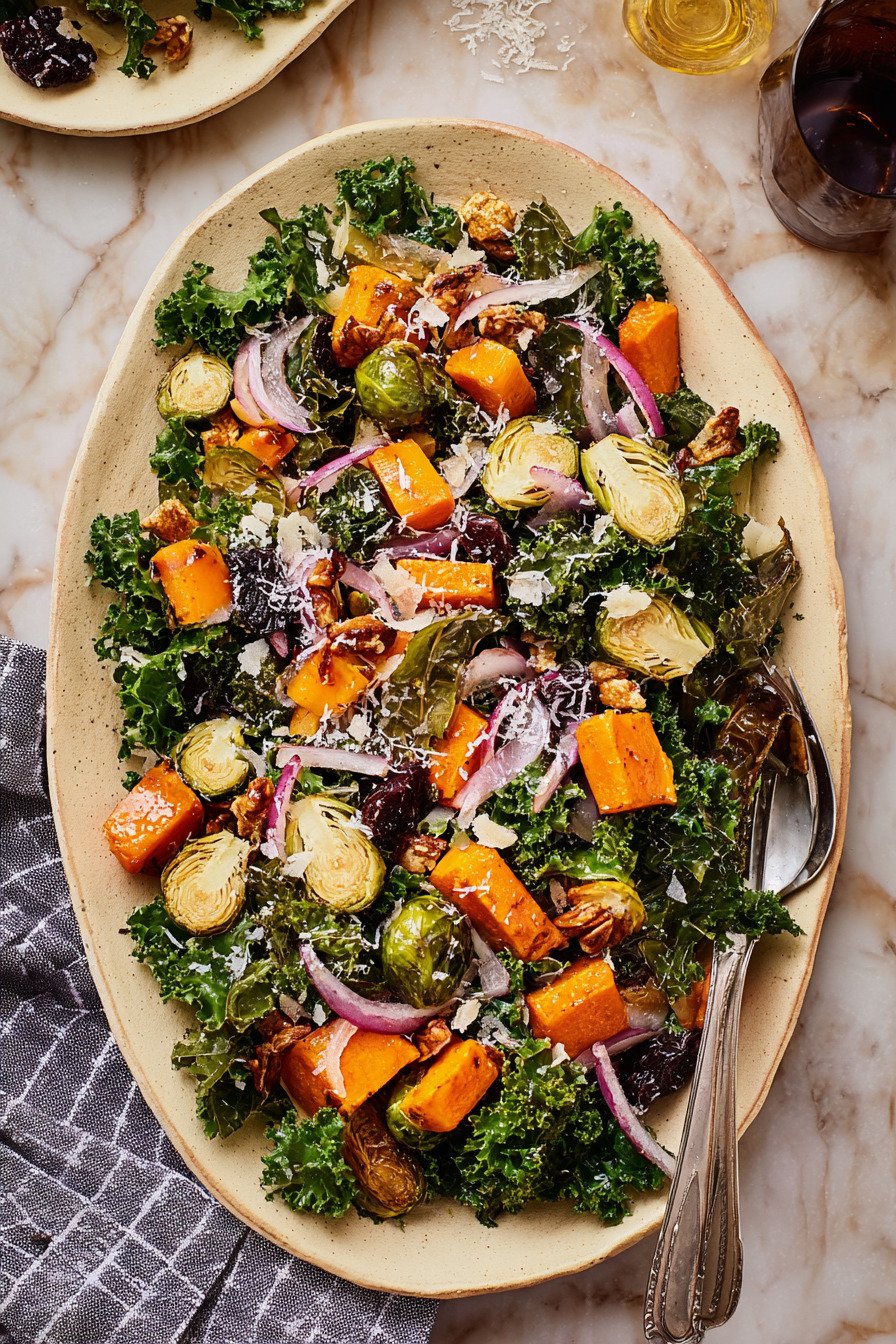
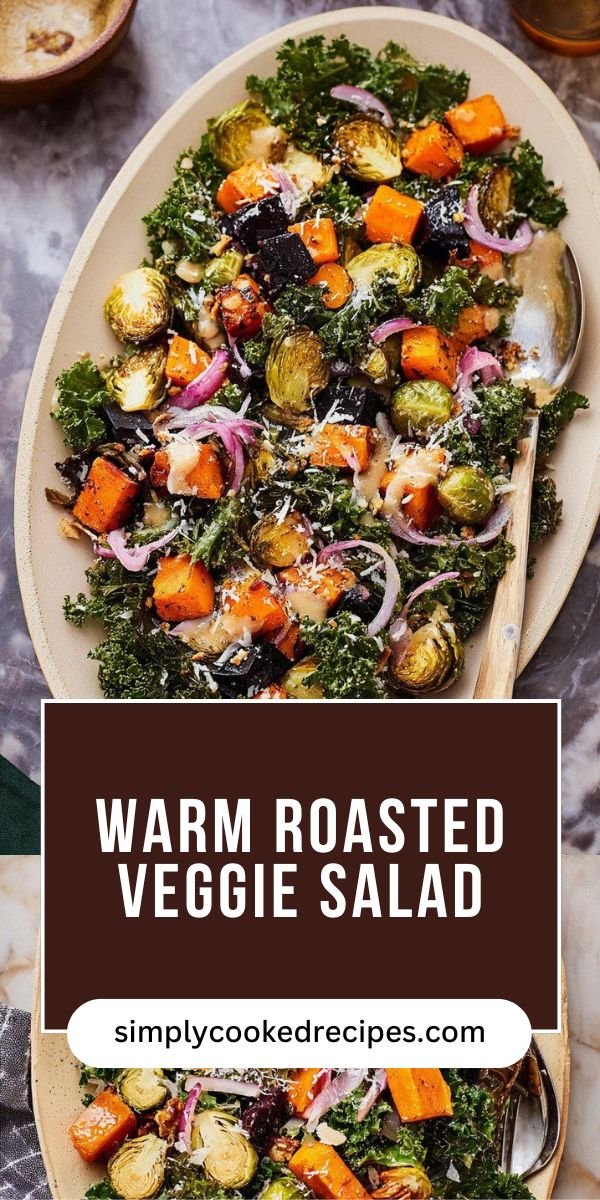
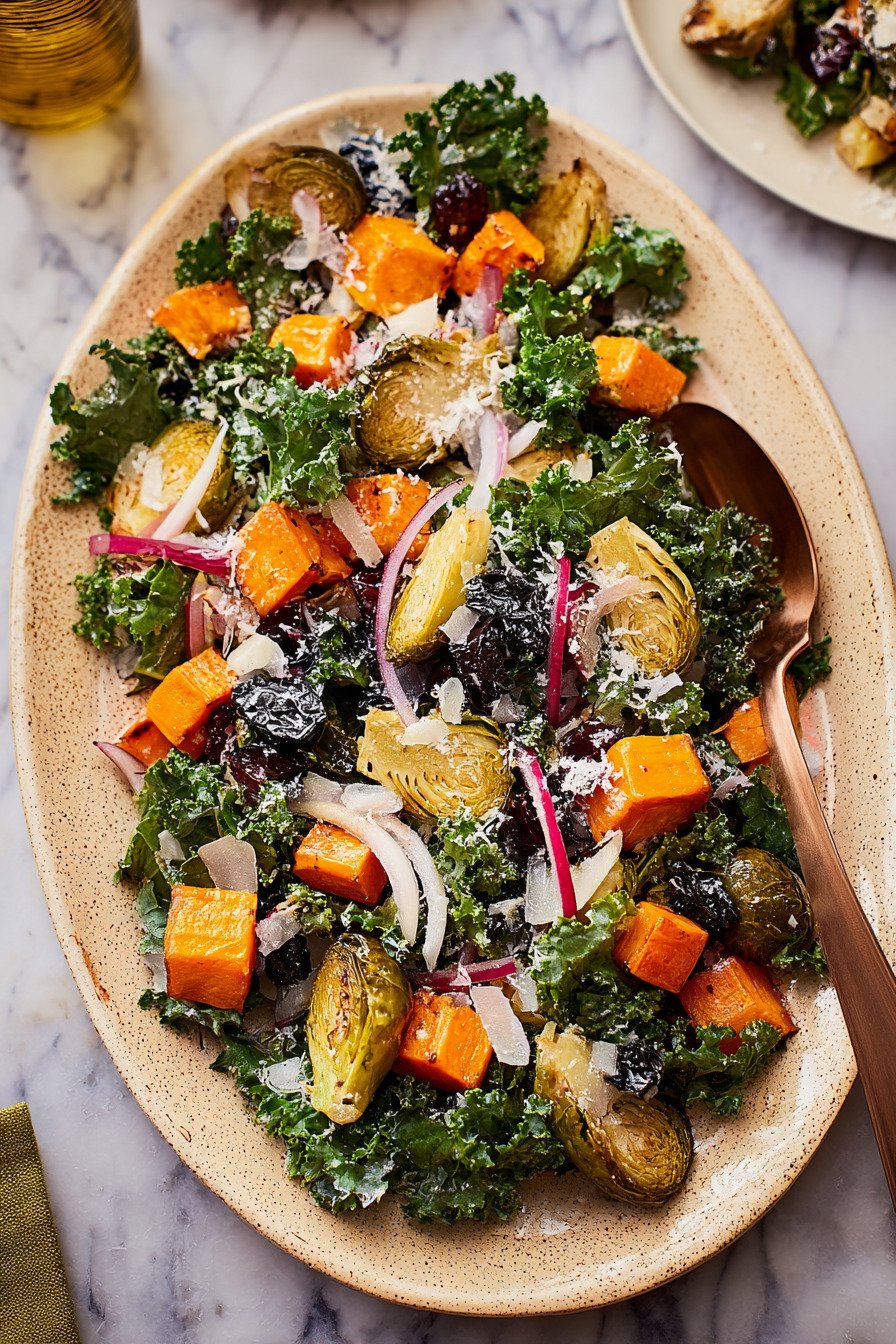
This warm roasted veggie salad is built around contrast: caramelized sweet potato, browned Brussels sprouts, sweet red onion, tender kale, chewy cranberries, salty Parmesan, and a sharp-sweet vinaigrette. The method works because the vegetables bring heat and roasted depth while the kale keeps the salad fresh. Instead of treating this like a cold chopped salad, think of it as a roasted vegetable kale salad where the warm ingredients gently relax the greens and help the dressing cling.
The most important goal is texture control. The vegetables need slight char marks, not burned edges. The kale needs to soften, not wilt into a heavy pile. The dressing should taste bright enough to wake up the vegetables but smooth enough that the maple syrup and olive oil round out the Dijon.
4) Why Most Warm Roasted Veggie Salad with Maple Dijon Vinaigrette Recipes Fail
Most fall roasted vegetable salad problems come from moisture, timing, or weak seasoning. If the sweet potato and Brussels sprouts are crowded on the baking sheet, they release steam and turn soft before they brown. The fix is a single layer with breathing room so the edges can caramelize.
Kale can also make the salad feel rough if it is chopped too large or skipped straight into the bowl without massaging. Salt breaks down the tougher leaf structure just enough to make the kale pleasant to chew. The visual cue is darker, softer kale that still has body.
The vinaigrette can fail when the acidity is not balanced. Apple cider vinegar and Dijon bring sharpness, while maple syrup softens that edge. If the dressing tastes flat, it usually needs salt. If it tastes harsh, it needs a little more whisking and time to blend with the olive oil.
Another common issue is tossing too early or too heavily. Hot vegetables can wilt the kale too much, while aggressive tossing can smash the sweet potato. A gentle toss keeps this roasted veggie kale salad warm, colorful, and textured.
5) Ingredients for Warm Roasted Veggie Salad with Maple Dijon Vinaigrette
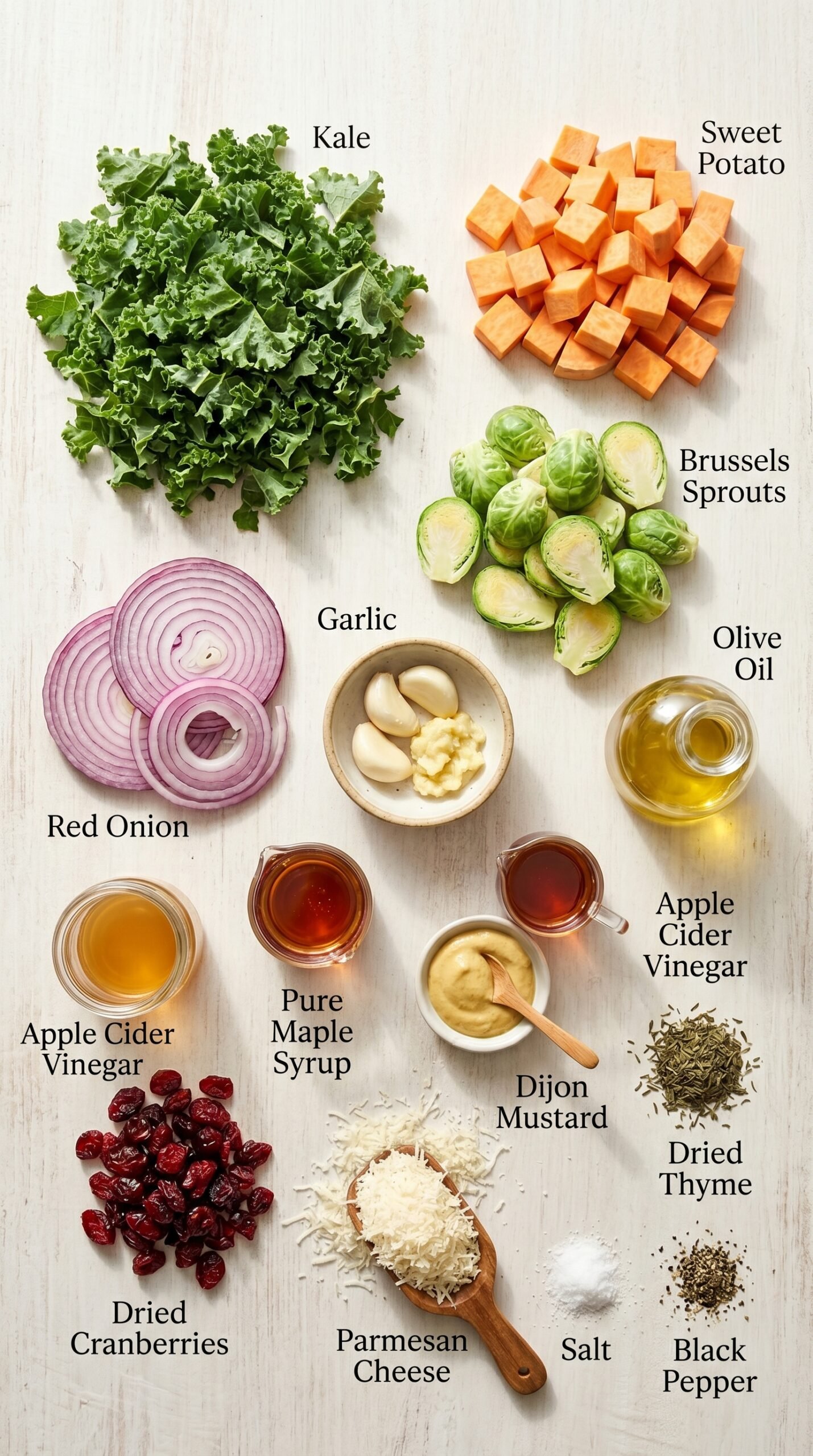
Sweet Potato: Sweet potato gives the salad body, natural sweetness, and a soft center that contrasts with the kale. Cut it into 1/2-inch cubes before roasting so it cooks through at the same pace as the Brussels sprouts. Larger pieces can stay firm in the middle.
Brussels Sprouts: Brussels sprouts add a nutty, lightly bitter edge that keeps the salad from tasting too sweet. Halving them exposes flat sides that brown well in the oven. If they are left whole, they may steam inside and miss those roasted edges.
Red Onion: Red onion softens and sweetens as it roasts. It should be sliced before going into the oven so the edges can caramelize. If chopped too small, it may burn before the sweet potato is tender.
Garlic: Mashed garlic seasons both the vegetables and the dressing. In the roasted vegetables, it gives savory depth; in the vinaigrette, it adds a sharper fresh note. Use it when mixing the vegetables and again when whisking the dressing so the flavor runs through the whole salad.
Olive Oil: Olive oil helps the vegetables brown and gives the vinaigrette body. Too little oil can make the vegetables dry; too much can make the salad feel heavy. The goal is a light coating, not a slick surface.
Kosher Salt and Sea Salt: Kosher salt seasons the vegetables before roasting, while sea salt helps soften the kale and adjust the dressing. Seasoning in stages matters because roasted vegetables need salt before heat, and kale needs salt before massaging.
Black Pepper: Black pepper adds warmth to both the vegetables and the vinaigrette. It is especially useful against the sweetness of the maple syrup and dried cranberries.
Apple Cider Vinegar: Apple cider vinegar gives the dressing brightness. It cuts through the olive oil, Parmesan, and sweet potato so the roasted veggie salad tastes lively instead of heavy.
Pure Maple Syrup: Maple syrup rounds out the vinaigrette and echoes the sweetness of the roasted vegetables. It also gives maple dijon roasted vegetables a deeper fall flavor without making the salad taste sugary.
Dijon Mustard: Dijon adds sharpness and helps the dressing hold together. It gives the vinaigrette enough structure to coat the kale instead of sliding to the bottom of the bowl.
Dried Thyme: Thyme adds an earthy note that suits the roasted vegetables. Use it in the dressing so its flavor spreads evenly.
Curly Kale: Curly kale holds up well to warm vegetables and dressing. Remove the stems because they stay tough, then chop the leaves small enough to catch the vinaigrette.
Dried Cranberries: Dried cranberries add chew and sweet-tart contrast. Add them after the vegetables roast so they stay plump rather than drying out in the oven.
Parmesan Cheese: Freshly grated Parmesan adds salt, richness, and a slightly nutty finish. Add it after roasting so it blends into the warm salad without becoming oily.
- Sweet potato vs smaller squash cubes: Sweet potato gives a creamy center and steadier sweetness; squash can be softer and more watery depending on the variety.
- Curly kale vs tender greens: Curly kale can handle warmth and dressing; tender greens may wilt too quickly in this warm roasted veggie salad.
- Maple syrup vs honey: Maple syrup gives a deeper fall flavor, while honey tastes more floral and can make the vinaigrette feel thicker.
- Freshly grated Parmesan vs pre-grated cheese: Fresh Parmesan melts into the salad more naturally, while pre-grated cheese can taste drier and less rounded.
6) How to Make Warm Roasted Veggie Salad with Maple Dijon Vinaigrette
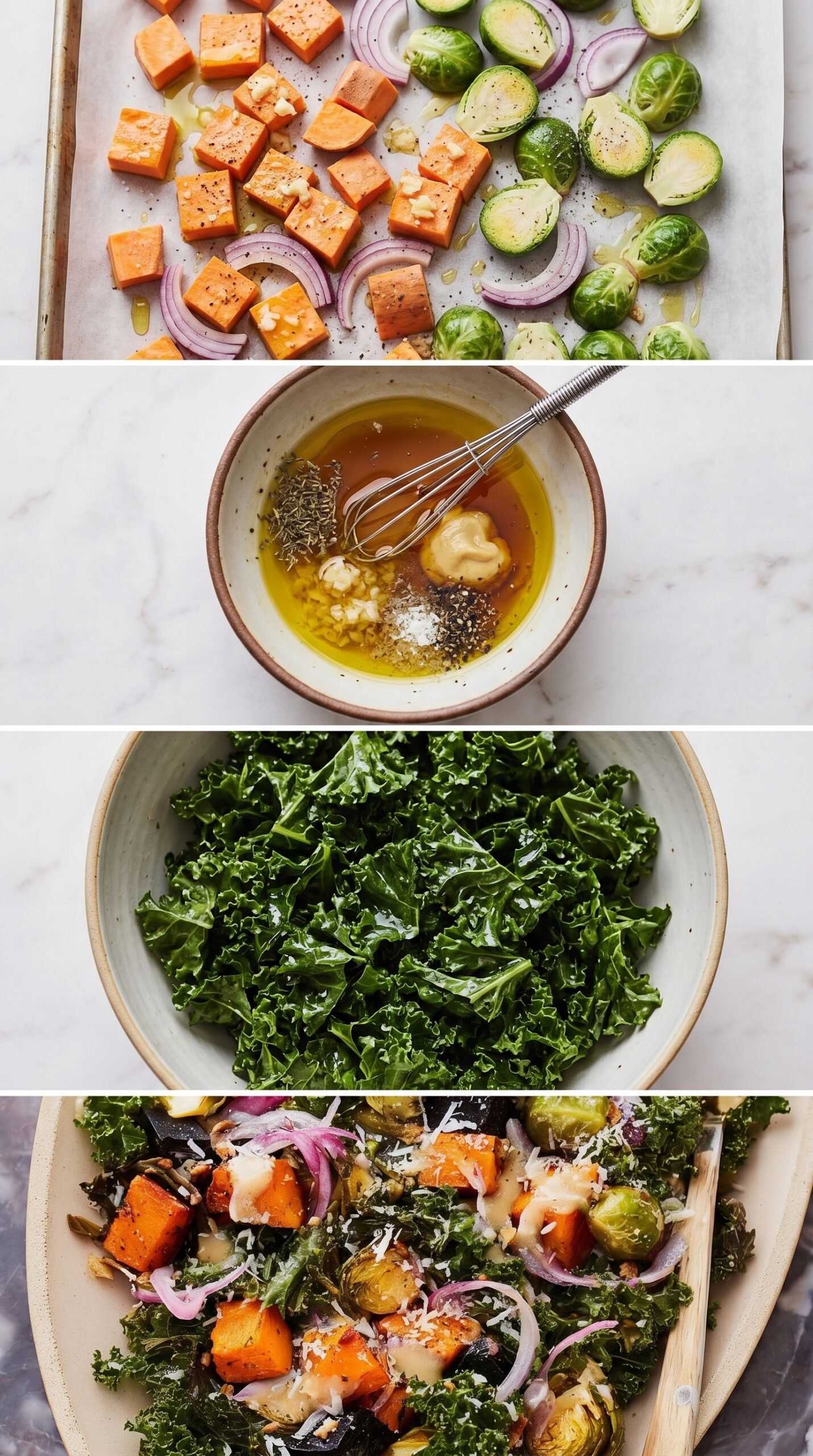
Step 1: Preheat the oven to 375 F and line a baking sheet with parchment paper. This temperature gives the sweet potato time to soften while still letting the Brussels sprouts and onion develop slight char marks.
Step 2: Wash and chop the sweet potato, Brussels sprouts, and red onion. Toss them with mashed garlic, olive oil, kosher salt, and black pepper until evenly coated. The vegetables should look lightly glossy, not soaked.
Step 3: Spread the vegetables on the baking sheet and roast for 20 to 25 minutes. Look for tender sweet potato, browned Brussels sprout edges, and onion that smells sweet and roasted. If the pan looks crowded, the vegetables may steam instead of brown.
Step 4: While the vegetables roast, whisk the olive oil, apple cider vinegar, maple syrup, Dijon mustard, mashed garlic, dried thyme, sea salt, and black pepper. The dressing should look glossy and taste sweet, tangy, savory, and balanced.
Step 5: Wash the kale, remove the stems, chop the leaves, and add them to a large bowl. Massage the kale with a pinch of sea salt for 1 to 2 minutes, just until it darkens and softens.
Step 6: Add the warm roasted vegetables to the softened kale, followed by dried cranberries and freshly grated Parmesan. Pour the dressing over the top and toss gently until every bite is coated without crushing the sweet potato.
7) Recipe Card: Warm Roasted Veggie Salad with Maple Dijon Vinaigrette
Warm Roasted Veggie Salad with Maple Dijon Vinaigrette
Ingredients
- 1 medium sweet potato, cut into 1/2-inch cubes, about 1 cup, so the pieces roast evenly.
- 6 ounces Brussels sprouts, trimmed and halved, about 1 1/2 cups, for caramelized edges and firm texture.
- 1 medium red onion, sliced, to add sweetness as it roasts.
- 2 cloves garlic, mashed, so the flavor spreads through the vegetables.
- 2 tablespoons olive oil, enough to lightly coat the vegetables without making them greasy.
- 1 teaspoon kosher salt, to season the vegetables before roasting.
- 1/2 teaspoon ground black pepper, for a warm savory finish.
For the Dressing
- 1/3 cup olive oil, used as the base of the vinaigrette.
- 2 tablespoons apple cider vinegar, for brightness and acidity.
- 2 tablespoons pure maple syrup, to balance the Dijon and roasted vegetables.
- 1 tablespoon Dijon mustard, to help emulsify the dressing and add sharpness.
- 2 cloves garlic, mashed, for a stronger savory dressing flavor.
- 1/2 teaspoon dried thyme, to add an earthy fall flavor.
- 1 pinch sea salt, to taste, for adjusting the vinaigrette.
- 1 pinch ground black pepper, to taste, for final seasoning.
For the Salad
- 3 cups curly kale leaves, stems removed, chopped, and loosely packed, so the salad base is tender after massaging.
- 1 pinch sea salt, used to help soften the kale fibers.
- 1/2 cup dried cranberries, for chewy sweetness and contrast.
- 1/2 cup freshly grated Parmesan cheese, for salty richness and texture.
Instructions
- Preheat the oven to 375°F and line a baking sheet with parchment paper so the roasted vegetables release easily and brown without sticking.
- Wash and chop the sweet potato, Brussels sprouts, and red onion. Add them to a bowl with the mashed garlic, kosher salt, olive oil, and black pepper, then toss until every piece has a light, even coating.
- Spread the vegetables on the prepared baking sheet in a single layer. Roast for 20 to 25 minutes, or until the sweet potato is tender, the Brussels sprouts have browned edges, and the onion smells sweet and roasted.
- While the vegetables roast, whisk the olive oil, apple cider vinegar, maple syrup, Dijon mustard, mashed garlic, dried thyme, sea salt, and black pepper in a small bowl until the dressing looks glossy and slightly thickened. Taste and adjust the salt and pepper.
- Wash the curly kale, remove the stems, chop the leaves into small pieces, and place them in a large bowl.
- Add a pinch of sea salt to the kale and massage it with clean hands for 1 to 2 minutes, just until the leaves darken, soften, and lose their stiff texture.
- Add the warm roasted vegetables to the softened kale, then add the dried cranberries and freshly grated Parmesan cheese.
- Pour the maple Dijon vinaigrette over the salad and toss gently with clean hands or salad tongs until the kale, vegetables, cranberries, and Parmesan are evenly coated. Serve warm, or store leftovers in an airtight container in the refrigerator for up to 3 days.
8) Tips for Making Warm Roasted Veggie Salad with Maple Dijon Vinaigrette
Cut the sweet potato into even 1/2-inch cubes. Uneven pieces are one of the fastest ways to get a salad with some hard bites and some mushy bites. Keep the Brussels sprouts halved so the cut sides can brown against the hot pan.
Dry the kale after washing. Extra water clinging to the leaves dilutes the maple Dijon vinaigrette and makes the bowl taste less seasoned. A salad spinner or clean towel helps protect the final texture.
Massage the kale with purpose, not force. The leaves should soften and darken, but they should not look crushed. This is the small step that turns a tough roasted vegetable kale salad into something tender and balanced.
Taste the dressing before adding it to the bowl. It should be slightly more assertive than you think because the kale, sweet potato, and Brussels sprouts will absorb and mellow the flavor.
9) Common Mistakes & Fixes
Problem: The vegetables taste soft but not roasted. Cause: The pan was crowded or the vegetables were too wet. Fix: Dry the vegetables well and spread them in one layer so the edges can brown.
Problem: The kale tastes tough. Cause: The stems were left in, the pieces were too large, or the kale was not massaged. Fix: Remove the stems, chop the leaves smaller, and massage with a pinch of salt until softened.
Problem: The dressing tastes too sharp. Cause: The vinegar and Dijon are not balanced enough by maple syrup, olive oil, and salt. Fix: Whisk thoroughly, taste, and adjust with a small pinch of salt or a touch more maple syrup if needed.
Problem: The salad turns soggy after sitting. Cause: Warm vegetables, kale, and dressing were combined too far ahead. Fix: Store the components separately and toss close to serving.
10) How to Tell Warm Roasted Veggie Salad Has the Right Texture
A properly made roasted veggie salad should look colorful and lifted, not wet or collapsed. The sweet potato should be tender when pierced, with edges that hold their shape. The Brussels sprouts should have browned cut sides and a slight bite. The kale should look darker and softer after massaging, but it should still have structure.
The aroma should be sweet, savory, and gently garlicky from the roasted vegetables and maple Dijon dressing. The flavor should move from earthy Brussels sprouts to sweet potato, bright vinaigrette, chewy cranberries, and salty Parmesan. Failure signs include watery pooling at the bottom of the bowl, pale steamed vegetables, harsh raw kale texture, or dressing that tastes sharp without balance.
11) Professional Secrets Behind Better Warm Roasted Veggie Salad
The professional move is building the salad in layers of texture. Roast the vegetables until they carry flavor on their edges, soften the kale before adding anything heavy, and use the vinaigrette as a connector rather than a cover-up. The dressing should not drown the salad; it should cling to the kale, glaze the warm vegetables, and bring the cranberries and Parmesan into the same bite.
Another useful technique is warm tossing. When the roasted vegetables are still warm, they slightly relax the kale and help the Parmesan blend into the salad. If the vegetables are scorching hot, they can wilt the greens too much. Let them sit briefly if they are steaming heavily, then toss while they still feel warm.
12) Best Dishes or Pairings to Serve With Warm Roasted Veggie Salad
This roasted fall salad with maple vinaigrette works well beside simple roasted chicken, baked salmon, turkey, pork tenderloin, or a cozy grain bowl. It also makes a strong vegetarian plate when served with lentils, quinoa, farro, or crusty bread.
For a holiday table, serve it near richer dishes because the vinegar and Dijon help refresh the palate. For lunch, add a protein and keep the dressing slightly lighter. For dinner, serve it warm so the sweet potato and Brussels sprouts feel more satisfying.

13) Making Warm Roasted Veggie Salad Ahead of Time
The best make-ahead strategy is to prepare the parts separately. Roast the sweet potato, Brussels sprouts, onion, and garlic, then cool and refrigerate them. Wash, chop, and dry the kale, but wait to massage it until closer to serving if you want the freshest texture.
The maple Dijon vinaigrette can be whisked ahead and refrigerated in a sealed jar. If it thickens or separates, let it sit at room temperature for a few minutes and shake or whisk before using. Toss the salad shortly before serving to protect the kale and prevent sogginess.
14) Storing Leftover Warm Roasted Veggie Salad
Store leftover warm roasted veggie salad in an airtight container in the refrigerator for up to three days. The texture will soften as the kale and vegetables absorb the dressing, so leftovers taste more marinated than freshly tossed.
For the best second-day texture, refresh leftovers with a small handful of fresh kale or a light sprinkle of Parmesan before serving. This salad is not ideal for freezing because kale, roasted sweet potato, and dressing lose their texture after thawing.
15) FAQ (Real Cooking Questions)
Can I serve this roasted veggie salad cold? Yes, but the texture and flavor are strongest when it is served warm or at room temperature. Cold roasted vegetables can taste firmer and less aromatic, so let leftovers sit briefly before eating.
Why do I need to massage the kale? Massaging breaks down some of the toughness in curly kale. The pinch of salt helps soften the leaves, making the salad easier to chew and better at holding dressing.
Can I make this roasted veggie kale salad dairy-free? Yes. The Parmesan adds salt and richness, so if you skip it, taste the salad and adjust the seasoning. You can add toasted nuts or seeds for extra savory texture.
How do I keep the vegetables from getting mushy? Cut them evenly, dry them well, and avoid crowding the pan. Mushy vegetables usually come from trapped steam, not too much roasting.
Can I double the recipe? Yes, but use two baking sheets instead of piling everything onto one pan. More vegetables need more surface area so they can roast properly.
16) Save This Warm Roasted Veggie Salad with Maple Dijon Vinaigrette Recipe
If this Warm Roasted Veggie Salad with Maple Dijon Vinaigrette helped you solve the problem of tough kale and soggy roasted vegetables, save it for fall dinners, holiday sides, or meal prep lunches. The key reminder is: roast with space, massage the kale, and toss with the dressing only when the textures are ready.
17) Conclusion
This roasted veggie salad proves that a warm salad can still feel fresh when every step has a purpose. The vegetables bring caramelized depth, the kale brings structure, the cranberries and Parmesan add contrast, and the maple Dijon vinaigrette ties everything together. Once you understand the timing, moisture control, and dressing balance, the recipe stops feeling unpredictable and starts feeling reliable.
18) Nutrition
Serving Size 1 portion Calories 318 Sugar 17 g Sodium 724 mg Fat 23 g Saturated Fat 5 g Carbohydrates 27 g Fiber 5 g Protein 6 g Cholesterol 11 mg




Leave a Comment