
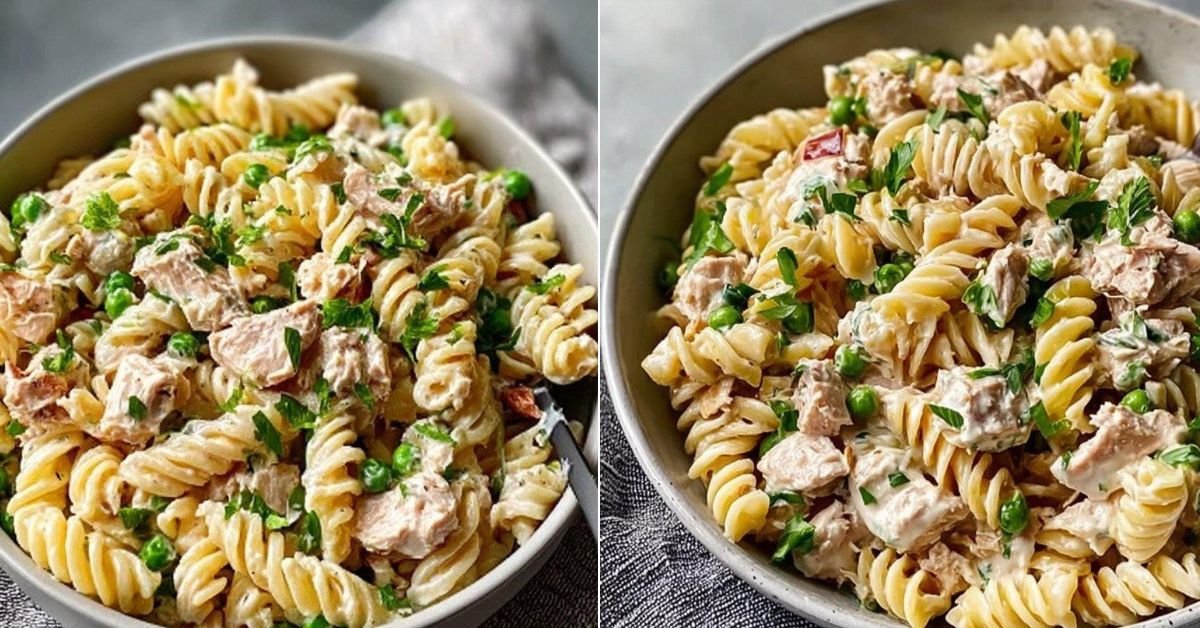
1) What I Learned Testing Creamy High-Protein Tuna Pasta Salad
Dry tuna pasta salad can turn a good lunch into something chalky, heavy, and forgettable. I’m Kathy, and my first test batch tasted flat after chilling because the dressing clung in spots instead of coating everything evenly. After adjusting the dressing, draining the tuna better, and cooling the pasta fully, I discovered that blending cottage cheese first was the real fix. This high protein tuna pasta salad became the kind of calm, reliable lunch I like having ready for busy afternoons: creamy, fresh, filling, and balanced without feeling weighed down.
Table of Contents
- 1) What I Learned Testing Creamy High-Protein Tuna Pasta Salad
- 2) Key Takeaways
- 3) Easy Creamy High-Protein Tuna Pasta Salad Recipe
- 4) Why Most Creamy High-Protein Tuna Pasta Salad Recipes Fail
- 5) Ingredients for Creamy High-Protein Tuna Pasta Salad
- 6) How to Make Creamy High-Protein Tuna Pasta Salad
- 7) Recipe Card: Creamy High-Protein Tuna Pasta Salad
- 8) Tips for Making Creamy High-Protein Tuna Pasta Salad
- 9) Common Mistakes & Fixes
- 10) How to Tell Creamy High-Protein Tuna Pasta Salad Has the Right Texture
- 11) Professional Secrets Behind Better Creamy High-Protein Tuna Pasta Salad
- 12) Best Dishes or Pairings to Serve With Creamy High-Protein Tuna Pasta Salad
- 13) Making Creamy High-Protein Tuna Pasta Salad Ahead of Time
- 14) Storing Leftover Creamy High-Protein Tuna Pasta Salad
- 15) FAQ (Real Cooking Questions)
- 16) Save This Creamy High-Protein Tuna Pasta Salad Recipe
- 17) Conclusion
- 18) Nutrition
2) Key Takeaways
- The biggest texture fix is blending the cottage cheese dressing until completely smooth before it touches the pasta.
- Cold rinsed pasta works better here because it stops carryover cooking and keeps the salad from turning gummy as it chills.
- Well-drained tuna and rinsed cannellini beans prevent watery dressing, which is one of the most common pasta salad problems.
- A short chill gives the dill, vinegar, Dijon, scallions, and parsley time to settle into a creamy tuna pasta salad with brighter flavor.
3) Easy Creamy High-Protein Tuna Pasta Salad Recipe
This creamy high-protein tuna pasta salad works because it treats the dressing like a sauce, not just a spoonful of mayonnaise stirred into cold pasta. Blending low-fat cottage cheese with light mayonnaise, Dijon mustard, red wine vinegar, dill, garlic powder, onion powder, and pepper creates a smooth binder that coats instead of clumps.
The salad base is built for protein and texture: protein-enriched pasta, albacore tuna, chopped hard-boiled eggs, cannellini beans, peas, scallions, and parsley. Each ingredient has a job. The tuna gives savory depth, the eggs add richness, the beans make the salad more filling, and the peas add a sweet pop that keeps the bowl from feeling too dense.
The goal is a protein tuna pasta salad that tastes creamy after chilling, not stiff or dry. That means the pasta needs to be cooked just past al dente, cooled quickly, and folded gently with the dressing so every bite has pasta, tuna, beans, herbs, and sauce in balance.
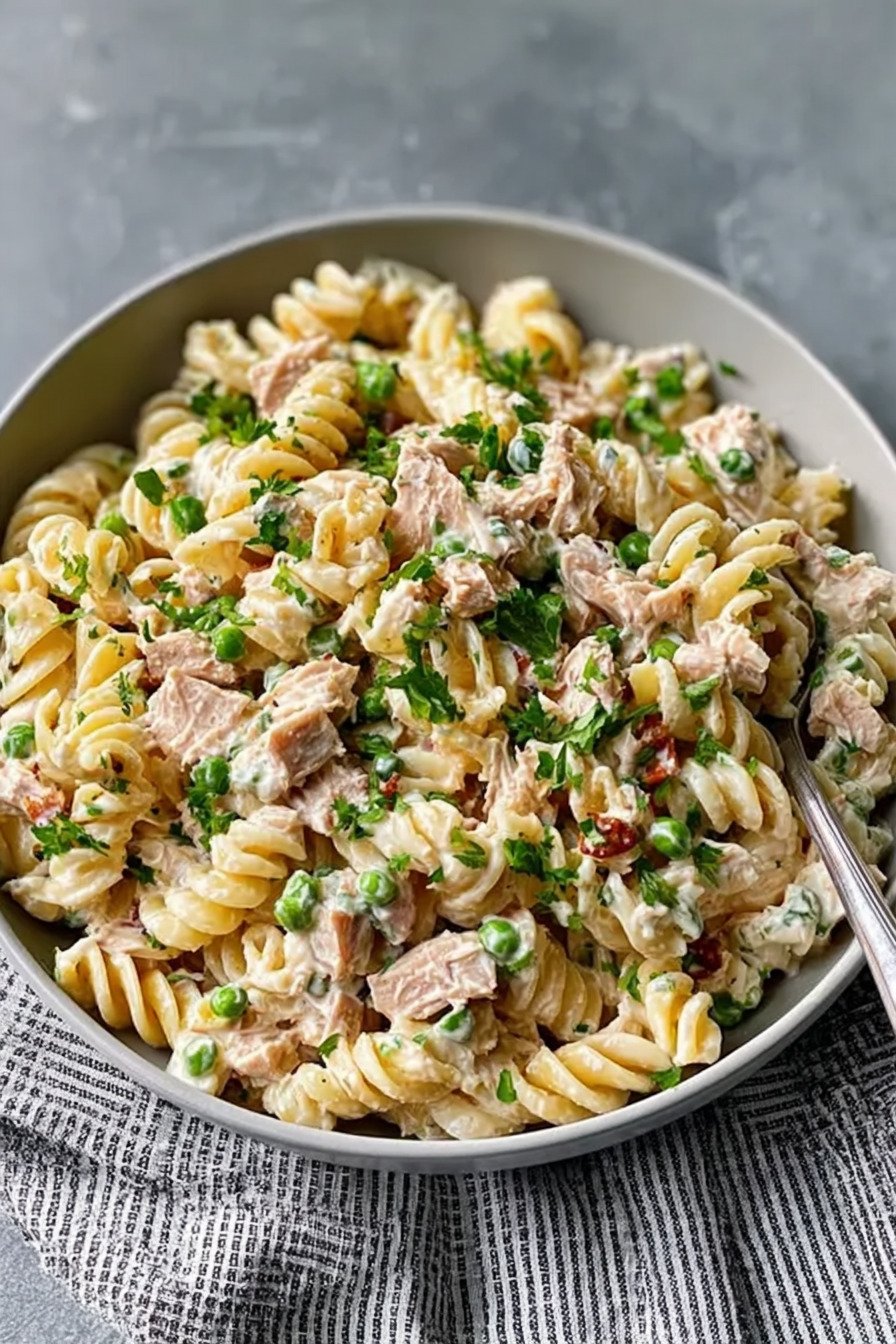
4) Why Most Creamy High-Protein Tuna Pasta Salad Recipes Fail
The dressing turns grainy: Cottage cheese is high in protein, but it needs blending to become smooth. If it is only stirred in, the curds stay visible and the salad tastes uneven. Blending it first gives the dressing a velvety texture that coats the pasta more like a creamy sauce.
The salad tastes watery: Tuna packed in water, canned beans, and thawed peas can all carry extra moisture. If they are not drained well, that liquid thins the dressing after the salad sits. The fix is simple: drain the tuna thoroughly, rinse and drain the beans, and let thawed peas shed excess water before mixing.
The pasta becomes mushy: Protein-enriched pasta can soften as it chills in dressing. Cooking it just past al dente works because it is tender enough cold, but not so soft that it breaks apart when folded. Rinsing under cold water stops the cooking and protects the final texture.
The flavor tastes flat after chilling: Cold food needs clear seasoning. Dijon mustard, red wine vinegar, dill, black pepper, scallions, and parsley are not just extras; they sharpen the creamy dressing and keep the healthy tuna pasta salad from tasting dull.
The salad becomes smashed: Cannellini beans and chopped eggs are tender. Aggressive stirring breaks them down and makes the salad look pasty. Folding with a wide spatula keeps the ingredients distinct while still coating them evenly.
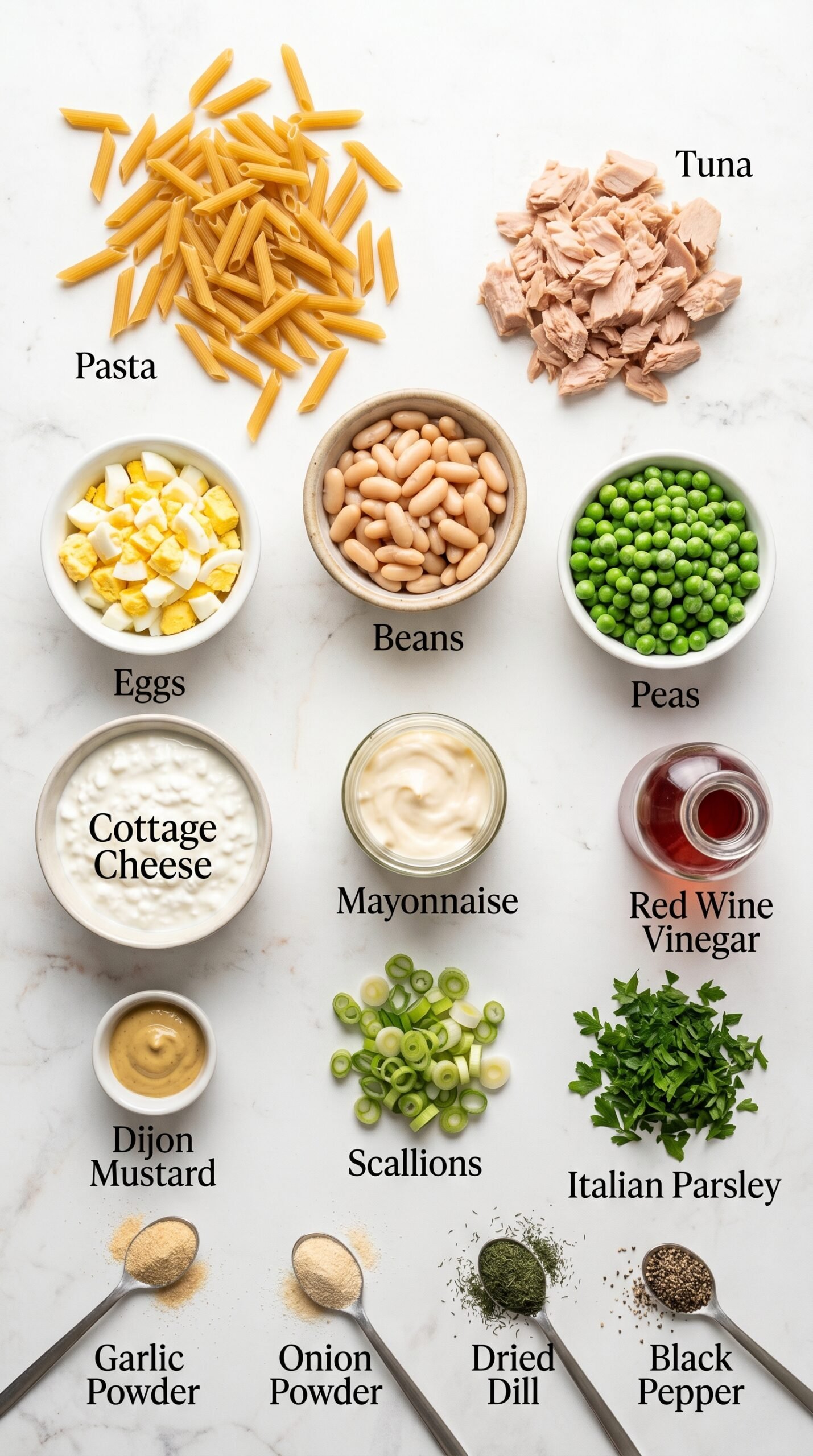
5) Ingredients for Creamy High-Protein Tuna Pasta Salad
Protein-enriched pasta: This gives the salad its structure and helps make it a high protein pasta salad. Use it when you want a more filling lunch bowl. If you swap in regular pasta, the salad will still work, but the protein level and chew will change.
Albacore tuna in water: Tuna brings clean, savory protein without adding excess oil. Drain it well before mixing. If the tuna is left wet, the dressing can loosen and taste diluted after chilling.
Hard-boiled eggs: Chopped eggs add richness and a softer bite that balances the pasta and beans. Use fully cooled eggs so they do not warm the salad base. If chopped too finely, they disappear into the dressing instead of adding texture.
Cannellini beans: These beans add creaminess, fiber, and a satisfying bite. Rinse them gently and drain them well. If replaced with firmer beans, the salad will feel less soft and cohesive.
Frozen peas: Thawed peas add sweetness, color, and a fresh contrast to the tuna. Use them after thawing, not frozen solid, so they blend naturally into the salad. Too much moisture on the peas can thin the dressing.
Low-fat cottage cheese: This is the main creamy binder. Blend it until smooth before combining it with the pasta. If skipped or left chunky, the salad loses the signature creamy texture that makes this protein dense tuna pasta salad feel satisfying.
Light mayonnaise: A small amount rounds out the dressing and gives it a familiar pasta salad finish. It supports the cottage cheese without making the bowl heavy. Adding too much can mute the vinegar and herbs.
Red wine vinegar: Vinegar brightens the dressing and cuts through the creamy ingredients. Add it before blending so the acidity distributes evenly. Without it, the salad can taste flat once cold.
Dijon mustard: Dijon adds sharpness and helps the dressing taste more complete. It works especially well with tuna and dill. Yellow mustard would taste stronger and less refined here.
Scallions: Scallions add a mild onion bite without overpowering the tuna. Slice them finely so their flavor spreads through the salad. Large pieces can taste harsh in a cold pasta salad.
Fresh parsley: Parsley keeps the salad fresh and clean-tasting. Add it near the end so it stays bright. Dried parsley will not give the same lift or color.
Garlic powder, onion powder, dried dill, and black pepper: These seasonings build the savory base of the dressing. Dill is especially important because it makes the tuna taste brighter. Taste after chilling because cold pasta often needs a final adjustment.
- Protein-enriched pasta vs regular pasta: Protein-enriched pasta makes the salad more filling, while regular pasta gives a softer, more traditional texture.
- Blended cottage cheese vs stirred cottage cheese: Blending creates a smooth dressing; stirring alone leaves curds and uneven coating.
- Albacore tuna vs chunk light tuna: Albacore gives larger, cleaner flakes, while chunk light tuna is softer and can blend more into the dressing.
- Red wine vinegar vs lemon juice: Red wine vinegar gives a rounded tang; lemon tastes brighter but can make the salad sharper if overused.
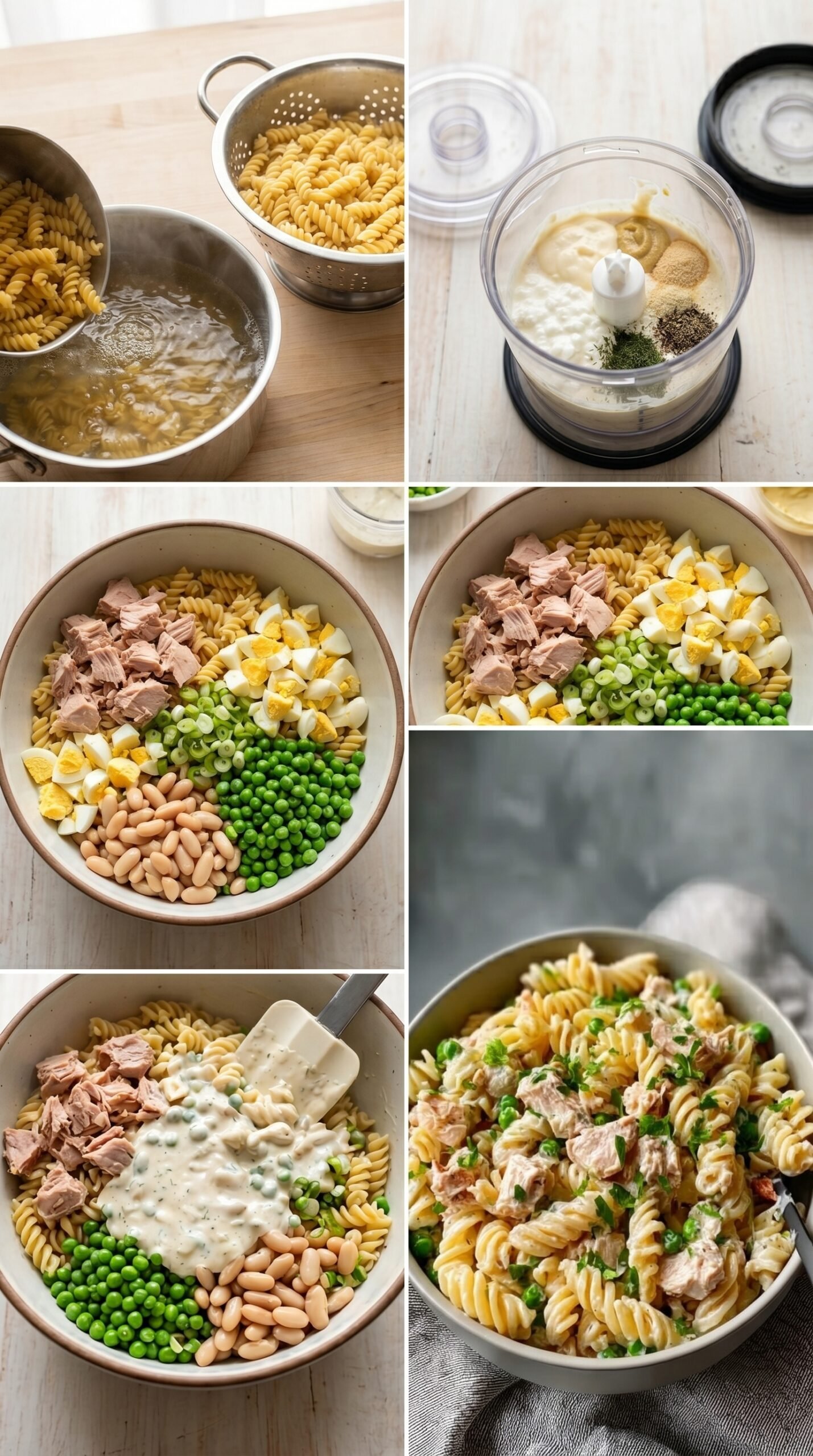
6) How to Make Creamy High-Protein Tuna Pasta Salad
Step 1: Start with the dressing because it needs to be smooth before it coats the salad. Blend the cottage cheese, light mayonnaise, Dijon mustard, red wine vinegar, garlic powder, onion powder, dried dill, and black pepper until the mixture looks creamy and uniform.
Step 2: Cook the protein-enriched pasta in salted boiling water according to the package directions, aiming for just past al dente. This texture matters because cold pasta firms slightly as it sits. Drain it, then rinse under cold water to stop the cooking.
Step 3: Build the salad base in a large bowl with the cooled pasta, drained tuna, chopped hard-boiled eggs, rinsed cannellini beans, thawed peas, and sliced scallions. Stir gently so the beans and eggs do not break down.
Step 4: Pour the creamy dressing over the salad and fold with a spatula from the bottom of the bowl. Look for even coating on the pasta and tuna, but stop before the salad becomes mashed or pasty.
Step 5: Taste before chilling, then adjust with a pinch of salt, extra black pepper, or a small splash of vinegar if needed. Cover and refrigerate for at least 30 minutes so the dressing settles and the flavors blend.
7) Recipe Card: Creamy High-Protein Tuna Pasta Salad
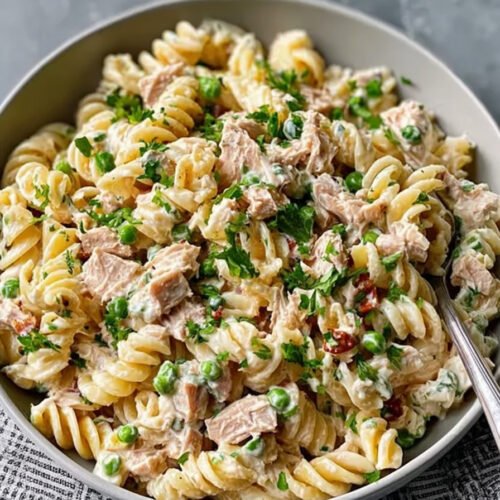
Creamy High-Protein Tuna Pasta Salad
Ingredients
- 8 ounces dry protein-enriched pasta, cooked just past al dente so it stays tender after chilling
- Two 5-ounce cans albacore tuna in water, drained well to keep the salad creamy instead of watery
- 2 large hard-boiled eggs, chopped for extra protein and a richer salad texture
- One 15.5-ounce can cannellini beans, drained and rinsed gently so they stay intact
- 1 cup frozen peas, thawed for sweetness, color, and a fresh pop in each bite
- 1 cup low-fat cottage cheese, blended smooth to create the creamy high-protein dressing
- 2 tablespoons light mayonnaise, used to round out the dressing without making it heavy
- 1 tablespoon red wine vinegar, added for tang and balance
- 1 teaspoon Dijon mustard, used to sharpen the dressing and help the flavors taste brighter
- 2 scallions, finely sliced for mild onion flavor and crunch
- ¼ cup fresh parsley, chopped for a clean herbal finish
- ½ teaspoon each garlic powder, onion powder, dried dill, and freshly ground black pepper, adjusted to taste after chilling
Instructions
- Add the low-fat cottage cheese, light mayonnaise, Dijon mustard, red wine vinegar, garlic powder, onion powder, dried dill, and black pepper to a blender or food processor. Blend until completely smooth, pausing to scrape down the sides so the dressing turns velvety instead of grainy.
- Bring a large pot of salted water to a boil. Add the protein-enriched pasta and cook according to the package directions, aiming for just past al dente because the pasta firms slightly as it chills. Drain, then rinse under cold water until fully cooled.
- In a large mixing bowl, combine the cooled pasta, drained tuna, chopped hard-boiled eggs, cannellini beans, thawed peas, and sliced scallions. Fold gently so the beans stay whole and the tuna remains in tender flakes.
- Pour the blended dressing over the salad base. Use a large spatula to fold from the bottom of the bowl until the pasta, tuna, beans, peas, and eggs are evenly coated without smashing the softer ingredients.
- Taste the salad and adjust carefully. Add a small pinch of salt if needed, more black pepper for bite, or a tiny extra splash of red wine vinegar if the dressing tastes too mild after coating the pasta.
- Cover and refrigerate for at least 30 minutes before serving. Stir once before plating, then finish with extra parsley or a light sprinkle of dill for a fresher aroma and cleaner flavor.
8) Tips for Making Creamy High-Protein Tuna Pasta Salad
Blend the dressing longer than you think you need to. Cottage cheese can look smooth on top while small curds remain near the blade, so stop and scrape down the sides once or twice. A smoother dressing makes the finished high protein tuna pasta salad taste creamy without needing much mayonnaise.
Cool the pasta completely before adding the tuna and dressing. Warm pasta absorbs dressing quickly and can leave the salad dry by the time it reaches the table. Cold pasta keeps the coating on the outside, where you can taste it.
Drain every canned ingredient with intention. Press the tuna lightly with a fork in the strainer, but do not crush it into paste. Let the beans sit for a minute after rinsing so extra water does not slip into the bowl.
Fold rather than stir hard. Pasta salad can turn dense when the beans, eggs, and tuna are overworked. A wide spatula lets you lift and turn the mixture while keeping the salad visually fresh and textured.
Season twice: once before chilling and once before serving. Cold temperatures mute flavor, so the salad may need a little more pepper, dill, vinegar, or salt after the resting time.
9) Common Mistakes & Fixes
Problem: The salad tastes dry after chilling. Cause: The pasta was too warm or the dressing was not smooth enough to coat evenly. Fix: Cool the pasta fully and blend the cottage cheese dressing until velvety before folding it in.
Problem: The dressing looks watery. Cause: Tuna, beans, or peas carried extra liquid into the bowl. Fix: Drain the tuna thoroughly, rinse and drain the beans, and pat thawed peas lightly if they seem wet.
Problem: The salad tastes bland. Cause: Cold pasta needs more seasoning than warm pasta. Fix: Add a small splash of red wine vinegar, more black pepper, or a tiny pinch of salt after the salad has chilled.
Problem: The beans and eggs break apart. Cause: The salad was stirred too aggressively. Fix: Use a wide spatula and fold slowly from the bottom of the bowl until coated.
Problem: The pasta feels too soft. Cause: It was overcooked before chilling. Fix: Cook it just past al dente, then rinse immediately with cold water to stop the cooking.
10) How to Tell Creamy High-Protein Tuna Pasta Salad Has the Right Texture
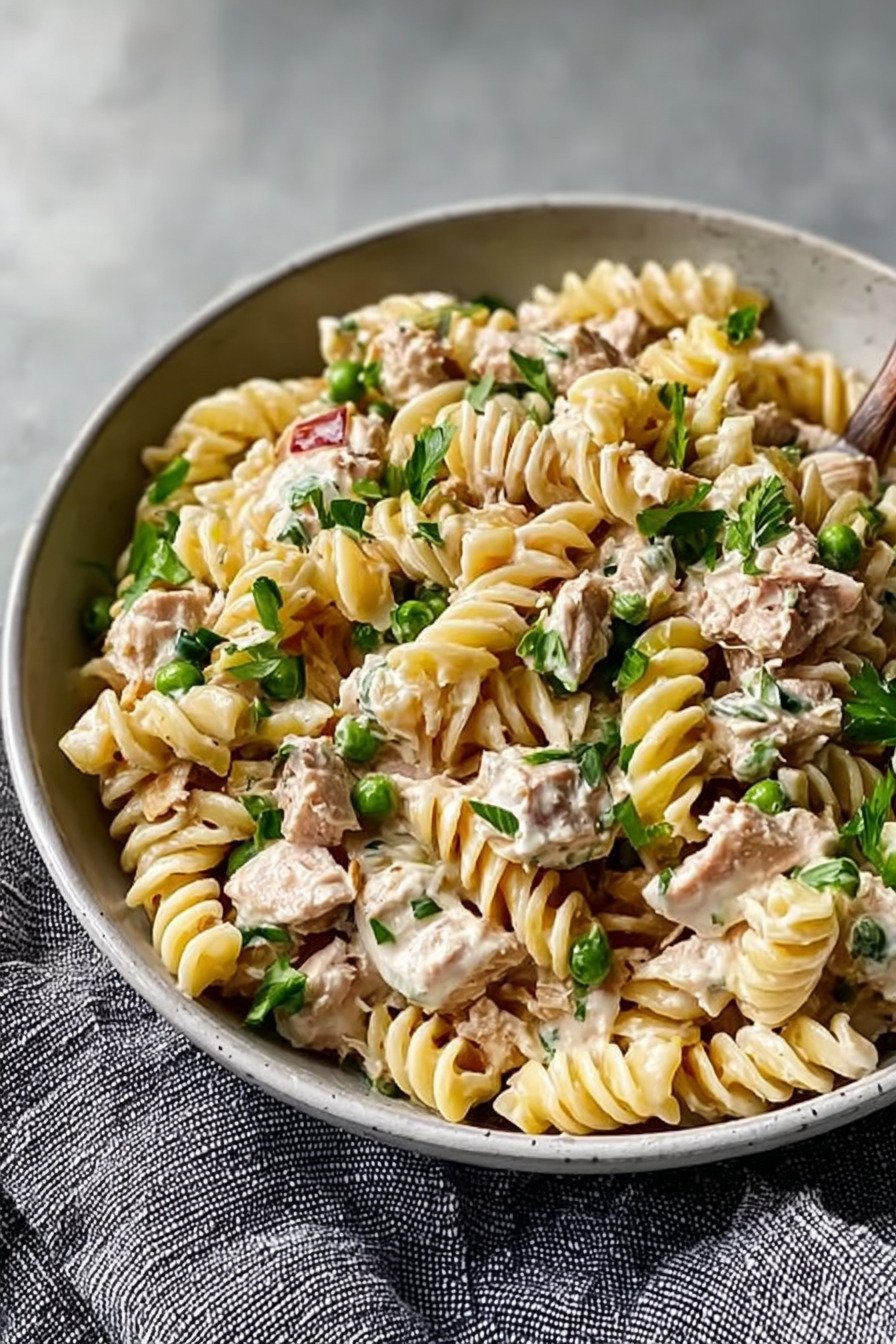
The salad should look creamy but not soupy. The dressing should cling lightly to the pasta, tuna, beans, peas, and eggs without pooling at the bottom of the bowl. If you drag a spoon through it, the ingredients should move together but still look separate and defined.
The pasta should feel tender when cold, not rubbery and not mushy. The tuna should remain in soft flakes, the beans should hold their shape, and the peas should add a gentle pop. If the salad looks pasty, it was likely overmixed. If it looks loose, one of the drained ingredients probably held too much liquid.
The aroma should be clean and savory, with dill, scallion, parsley, and tuna coming through before the creamy dressing. The flavor should be tangy enough to feel fresh, peppery enough to avoid blandness, and creamy enough to make this easy tuna pasta lunch satisfying.
11) Professional Secrets Behind Better Creamy High-Protein Tuna Pasta Salad
The first professional habit is controlling moisture. Cold salads are unforgiving because excess water has nowhere to cook off. Drained tuna, drained beans, and cooled pasta give the dressing the right surface to cling to.
The second secret is balancing fat, acid, and protein. Cottage cheese brings body, light mayonnaise adds roundness, Dijon gives bite, and red wine vinegar keeps the dressing from tasting heavy. When those elements are blended together first, the salad tastes more polished.
The third secret is treating herbs as freshness, not decoration. Parsley and dill make the creamy tuna pasta salad taste brighter, especially after refrigeration. Add extra parsley just before serving if the salad has been stored overnight.
The final secret is gentle mixing. A salad with tuna, eggs, and beans should not be beaten into one texture. Distinct ingredients make each bite more interesting and help the bowl look freshly made.
12) Best Dishes or Pairings to Serve With Creamy High-Protein Tuna Pasta Salad
This high protein tuna pasta salad is filling enough for lunch on its own, but it also works well with crisp, fresh sides. Serve it over romaine, butter lettuce, or baby spinach when you want a lighter plate with more crunch.
For a simple lunch box, pair it with cucumber slices, cherry tomatoes, whole-grain crackers, or a small cup of fruit. The fresh vegetables help balance the creamy dressing, while crackers add contrast without needing another heavy side.
For a casual dinner, serve it with roasted vegetables, tomato soup, a simple green salad, or toasted pita. The salad is chilled and creamy, so it pairs best with something crisp, warm, or acidic.
13) Making Creamy High-Protein Tuna Pasta Salad Ahead of Time
This salad is a strong make-ahead option because the dressing benefits from a short rest. Make it at least 30 minutes before serving so the dill, vinegar, Dijon, scallions, and parsley have time to blend into the creamy base.
For the best texture, make it up to 24 hours ahead. After that, the pasta may absorb more dressing and the herbs can soften. If you are preparing it for meal prep, keep a small spoonful of extra blended dressing or a splash of vinegar nearby to refresh the texture before eating.
If serving for guests, stir gently right before bringing it to the table and garnish with a little extra parsley or dill. That final fresh layer makes the salad look brighter and taste more balanced.
14) Storing Leftover Creamy High-Protein Tuna Pasta Salad
Store leftover creamy high-protein tuna pasta salad in an airtight container in the refrigerator. For best quality, use it within 3 days. Because it contains tuna, eggs, cottage cheese, and mayonnaise, it should stay chilled and should not sit out for long periods.
Do not freeze this salad. The creamy dressing can separate, the pasta can become soft, and the eggs and beans may lose their pleasant texture after thawing.
Before serving leftovers, stir gently from the bottom of the container. If the salad has thickened, add a small splash of cold water, a touch of red wine vinegar, or a spoonful of blended cottage cheese dressing to bring back the creamy consistency.
15) FAQ (Real Cooking Questions)
Can I use regular pasta instead of protein-enriched pasta? Yes, but the salad will not be as protein dense. Regular pasta also tends to feel softer, so watch the cooking time carefully and avoid overcooking.
Why blend the cottage cheese? Blending turns it into a smooth dressing. If you skip this step, the salad can taste lumpy instead of creamy, and the dressing will not coat the pasta as evenly.
Can I make this healthy tuna pasta salad the night before? Yes. It holds well overnight when stored cold in an airtight container. Stir before serving and adjust with a little vinegar or pepper if the flavor tastes muted.
What can I use instead of cannellini beans? Chickpeas or white beans can work, but the texture will change. Cannellini beans are softer and creamier, which fits the dressing especially well.
How do I keep tuna pasta salad from getting watery? Drain the tuna very well, rinse and drain the beans, thaw the peas completely, and cool the pasta before mixing. Most watery pasta salad problems come from hidden moisture.
16) Save This Creamy High-Protein Tuna Pasta Salad Recipe
If this Creamy High-Protein Tuna Pasta Salad helped you solve dry, bland, or watery lunch salads, save it for meal prep, work lunches, or warm-weather dinners. The key reminder is: blend the cottage cheese dressing smooth, cool the pasta completely, and fold gently for a creamy texture that still tastes fresh.
17) Conclusion
A good high protein tuna pasta salad should not feel like a compromise between healthy and satisfying. When the dressing is blended smooth, the pasta is cooled properly, and the tuna, eggs, beans, peas, scallions, and parsley are folded with care, the result is creamy without heaviness and filling without tasting dull.
The real secret is not adding more mayonnaise or more ingredients. It is controlling moisture, balancing acidity, and protecting texture. Once you understand those small details, this salad becomes a dependable recipe you can make with confidence for lunches, meal prep, or a simple chilled dinner.
18) Nutrition
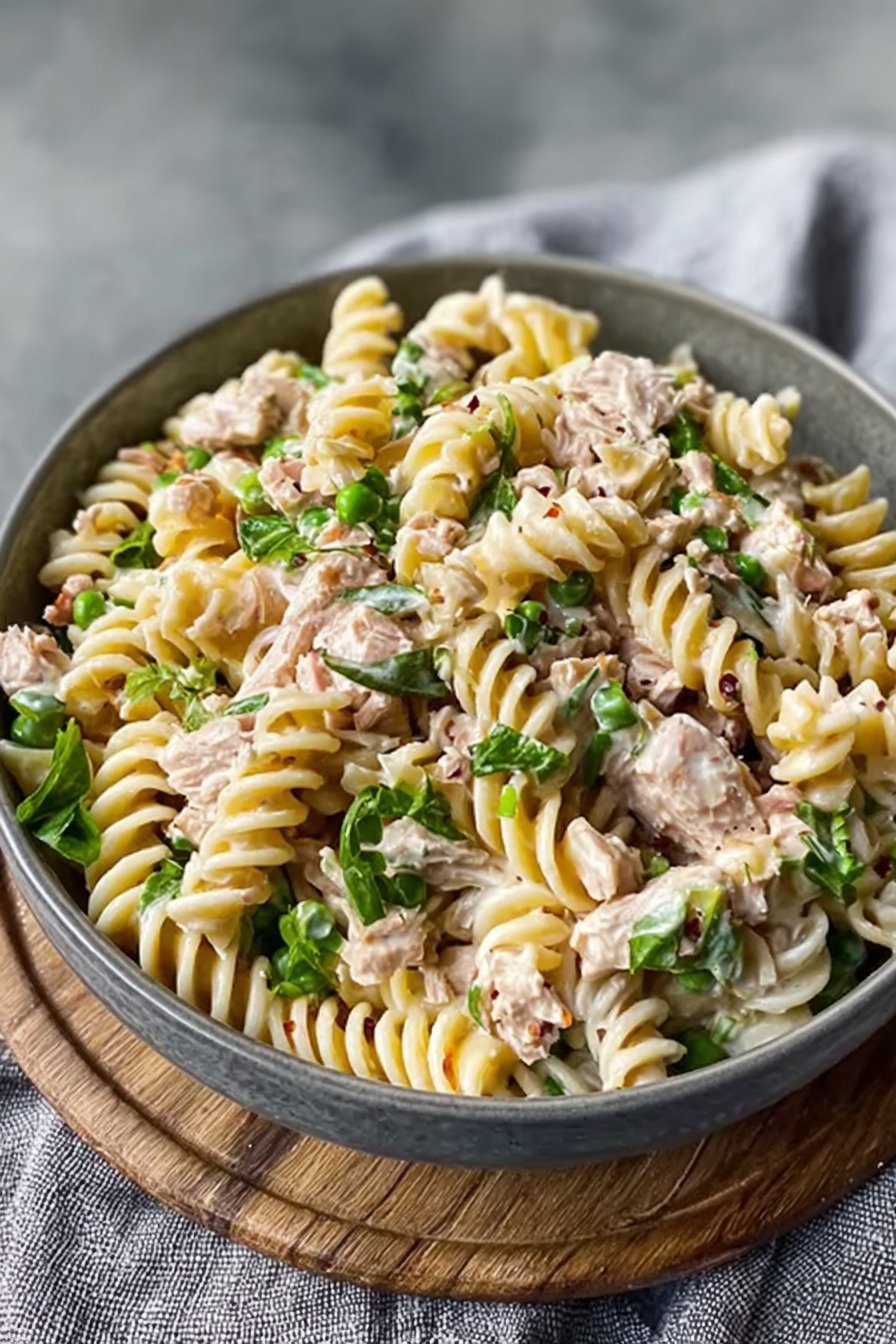
Serving Size 1 portion Calories 395 Sugar 4 g Sodium 575 mg Fat 8 g Saturated Fat 2 g Carbohydrates 48 g Fiber 8 g Protein 34 g Cholesterol 95 mg

Leave a Comment