
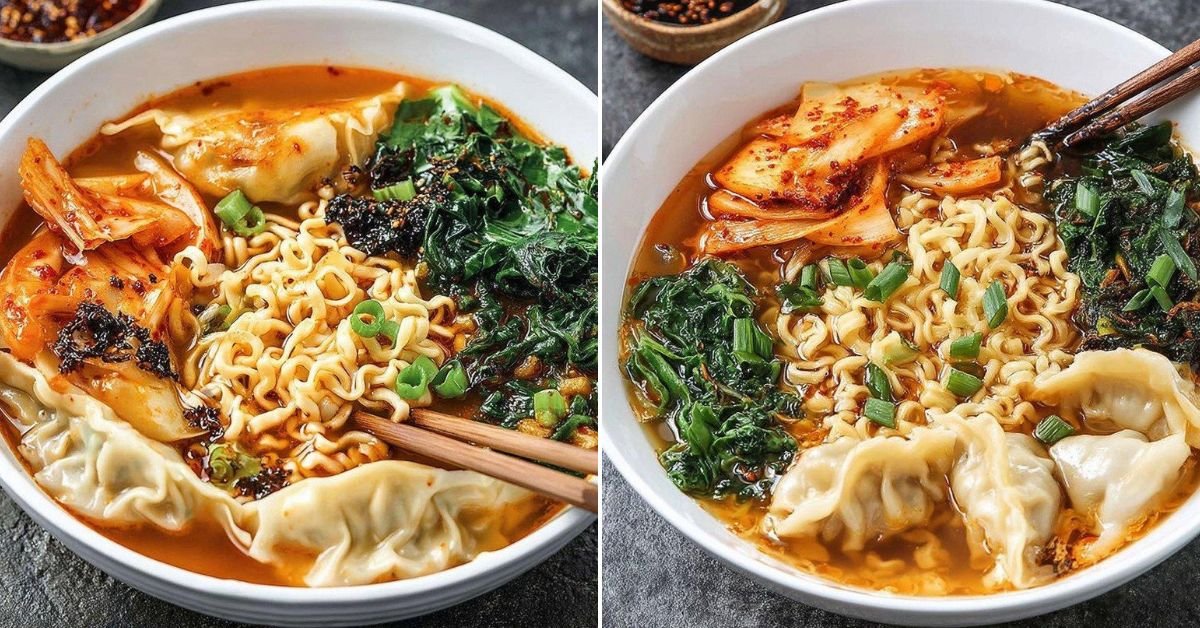
When I first made this soup, I was craving something that felt like a hug in a bowl. The warmth of the broth, the slight kick from the kimchi, and the comfort of chewy dumplings hit all the right notes. I don’t know about you, but for me, a big steaming pot of soup has this strange way of calming a busy mind. The noodles soften as they sit, soaking in the flavor, and every bite feels more grounding than the last. This dish belongs to those korean vegetarian recipes that prove you don’t need meat to feel full. The kimchi brings tangy heat, while the dumplings add that little extra heft. It’s the kind of soup you make when you want something hearty but not heavy. If you’ve been searching for a kimchi soup recipe that’s easy but rewarding, this might be the one you’ll come back to again and again. I love that it gives me a chance to use up that jar of kimchi sitting in the fridge. Whether you’re trying a korean kimchi recipe for the first time or already obsessed with recipes with kimchi, you’ll find joy here. It’s similar to a kimchi stew recipe, only lighter, and it works with both a fresh kimchi recipe or an easy kimchi recipe if you’ve made a quick batch. The broth soaks into the noodles and the dumplings float happily, waiting for you to scoop them up. It’s not fancy food, but it’s food that makes you sigh in relief after a long day.
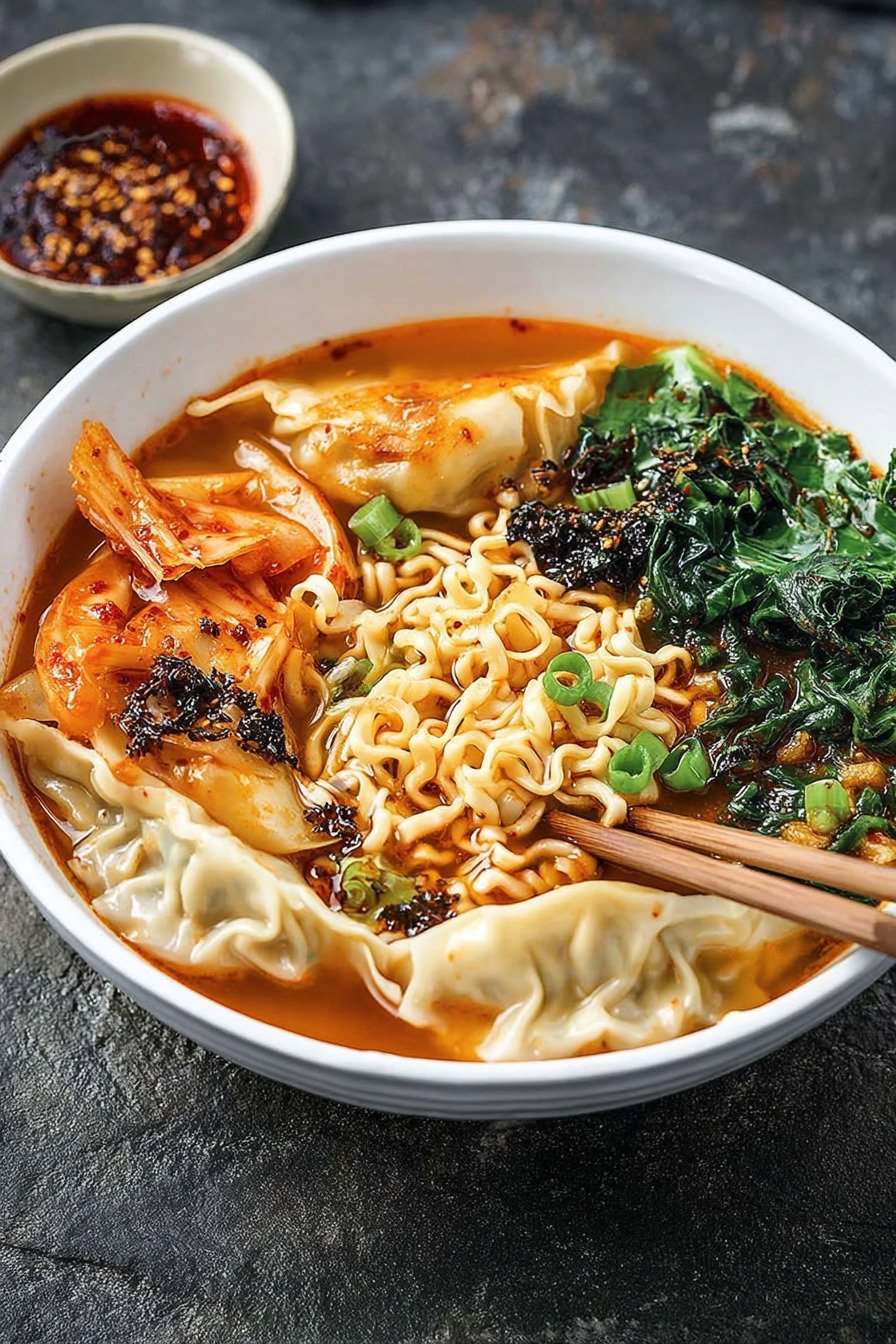
Table of Contents
- 1) Key Takeaways
- 2) Easy Kimchi and Dumpling Noodle Soup Recipe
- 3) Ingredients for Kimchi and Dumpling Noodle Soup
- 4) How to Make Kimchi and Dumpling Noodle Soup
- 5) Tips for Making Kimchi and Dumpling Noodle Soup
- 6) Making Kimchi and Dumpling Noodle Soup Ahead of Time
- 7) Storing Leftover Kimchi and Dumpling Noodle Soup
- 8) Try these Soups next!
- 9) Kimchi and Dumpling Noodle Soup Recipe
- 10) Nutrition
1) Key Takeaways
- This soup combines kimchi, dumplings, and noodles in a rich broth.
- It is one of the best korean vegetarian recipes for comfort and ease.
- You can use homemade or store-bought dumplings.
- It works well with fresh kimchi or leftover kimchi from your fridge.
2) Easy Kimchi and Dumpling Noodle Soup Recipe
When I think about comfort food, my mind goes straight to soup. There is just something about a steaming bowl that makes the whole world feel lighter. This kimchi and dumpling noodle soup does exactly that. It gives you the deep flavor of a kimchi soup recipe with the hearty bite of dumplings and chewy noodles.
I wanted this recipe to be simple enough for a weeknight yet special enough that you’ll make it for guests. I’ve tried a lot of korean kimchi recipe ideas, and this one is my favorite because it pulls together so quickly while tasting like it took hours. The broth carries the bright tang of kimchi, while the dumplings feel like little pockets of joy.
That’s the beauty of recipes with kimchi. They feel alive. Every spoonful tells a story. The sour notes, the gentle heat, and the soft dumplings all mingle together until you find yourself scraping the bottom of the bowl. It’s not just dinner, it’s a small celebration in the middle of the week.
3) Ingredients for Kimchi and Dumpling Noodle Soup
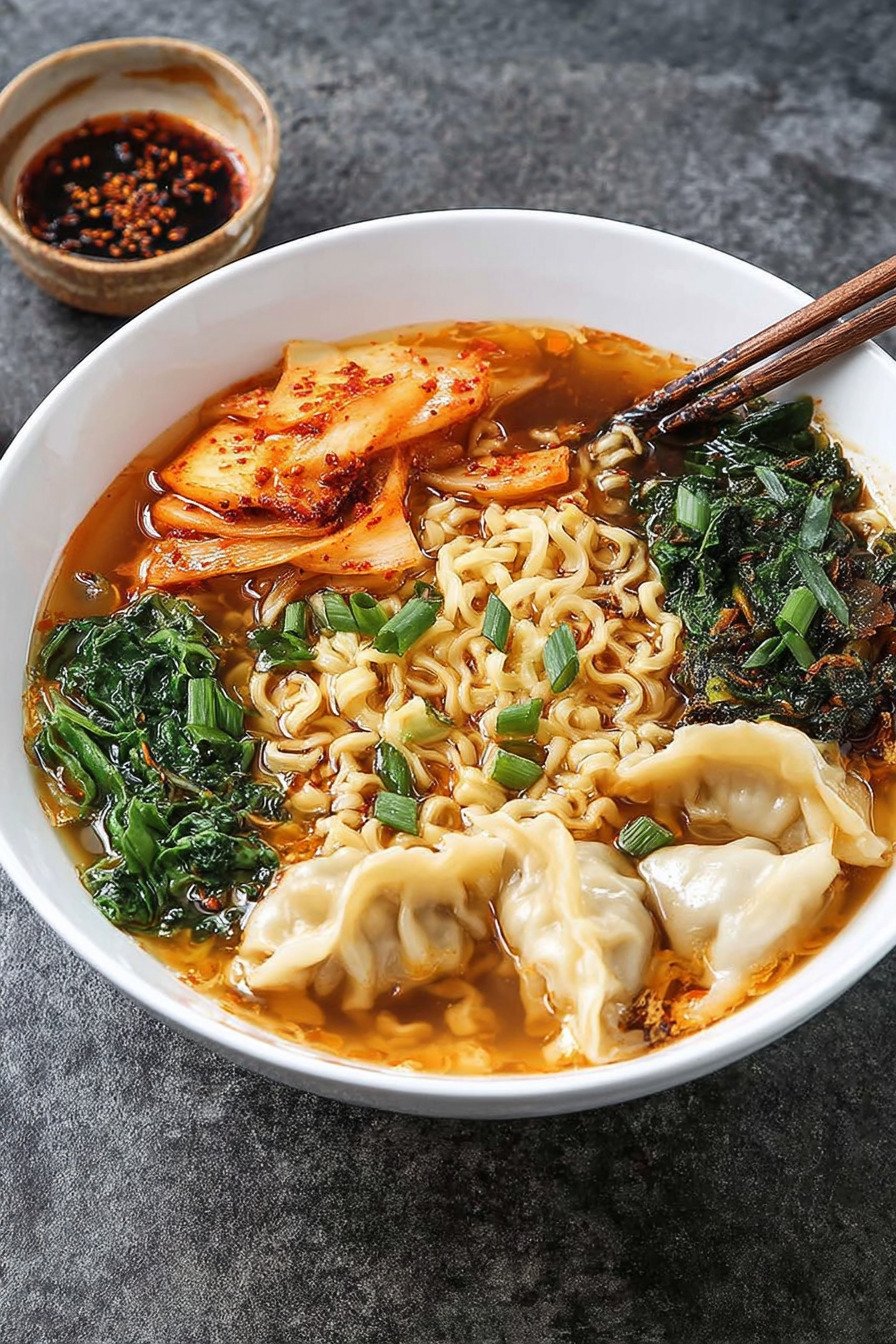
Vegetable Broth: This is the base that keeps the soup light and vegetarian. Use a good-quality broth for the best flavor.
Kimchi: The heart of this recipe. It adds spice, tang, and depth. Any kimchi will work, but a fresh kimchi recipe makes it extra special.
Kimchi Juice: Don’t throw it away. It’s liquid gold that deepens the broth and boosts flavor.
Garlic: A couple of minced cloves add a sharp note that balances the sourness of kimchi.
Soy Sauce: A small splash gives the broth umami and saltiness.
Sesame Oil: Just a drizzle for that nutty aroma that carries through the steam of the bowl.
Dumplings: Store-bought or homemade, these add heartiness. Vegetarian dumplings fit perfectly here.
Noodles: Udon, ramen, or even rice noodles work. They absorb the broth beautifully.
Green Onions: Fresh, sharp, and sprinkled on top for contrast.
Gochugaru: Korean chili flakes add spice and that signature red tint. Adjust to your taste.
Salt: Season to taste once everything comes together.
4) How to Make Kimchi and Dumpling Noodle Soup
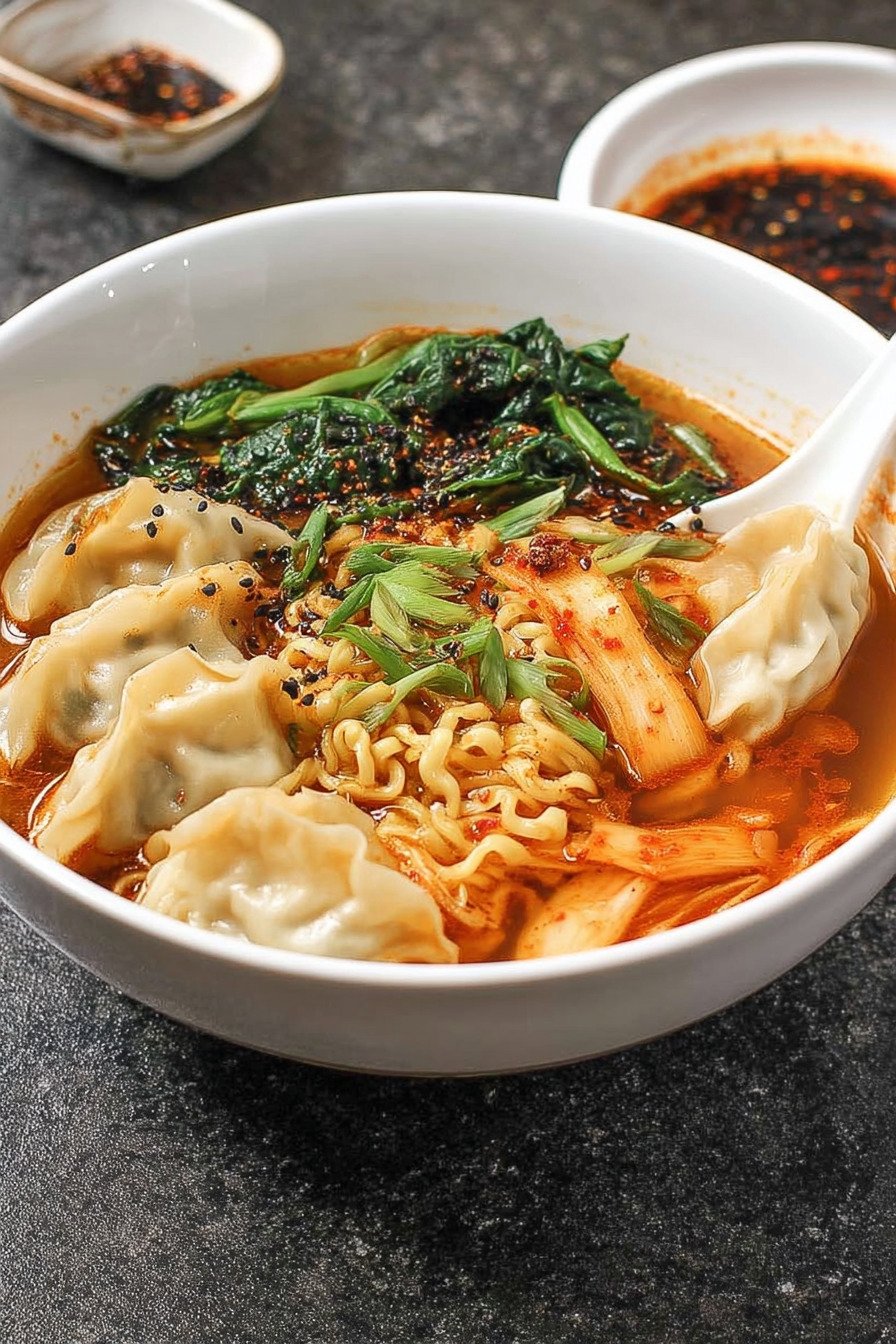
Step 1. Heat the vegetable broth in a large pot. Let it warm slowly so it builds flavor without rushing.
Step 2. Stir in garlic, soy sauce, sesame oil, kimchi, and kimchi juice. Let the broth simmer gently for about ten minutes so the flavors blend.
Step 3. Drop in the dumplings. Watch them rise to the surface when they’re ready, usually around six to eight minutes.
Step 4. Add your noodles. Cook until tender, but not mushy. About five minutes is usually perfect.
Step 5. Taste the broth. Add salt if you feel it needs a little more depth. For extra heat, sprinkle in some gochugaru.
Step 6. Ladle into bowls. Top with sliced green onions and serve hot.
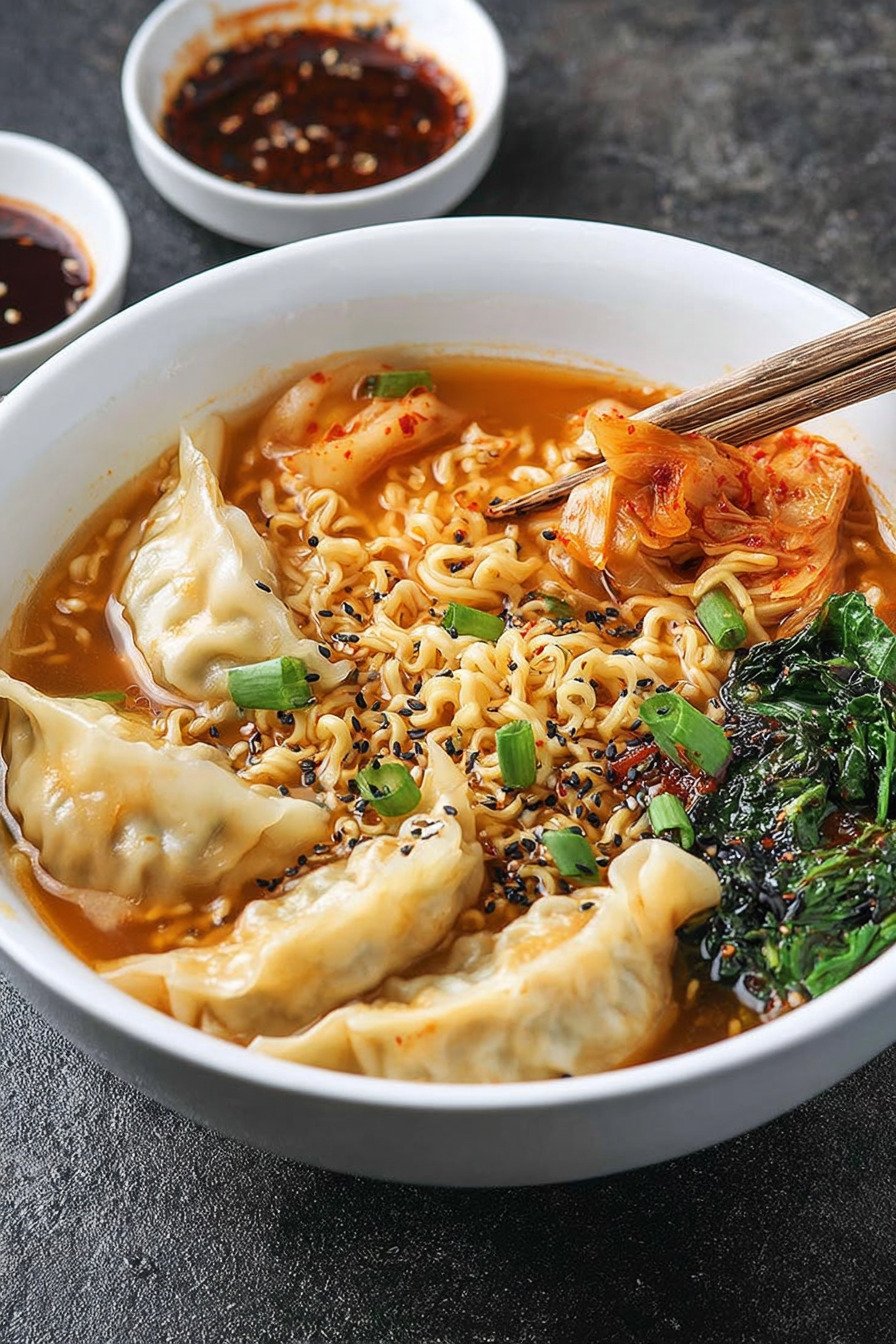
5) Tips for Making Kimchi and Dumpling Noodle Soup
I’ve made this soup more times than I can count, and every time I learn something new. One trick is to let the kimchi cook just long enough to mellow, but not so long that it loses its crunch. Another is to cook the noodles separately if you’re worried they’ll soak up too much broth.
If you like heat, don’t be shy with the gochugaru. I’ve even stirred in a spoonful of gochujang for a deeper kick. If you’re looking for easy kimchi recipe ideas, this soup is a good way to start experimenting. It’s forgiving, and you can play with spice levels.
For dumplings, frozen ones are fine. Just give them a little more time to cook through. And if you want richer flavor, try mushroom broth instead of vegetable. It gives the soup an earthier backbone that pairs beautifully with the sour edge of the kimchi stew recipe inspiration.
6) Making Kimchi and Dumpling Noodle Soup Ahead of Time
Soup and time have a funny relationship. The longer it sits, the deeper the flavors get. You can make this one ahead, but keep the noodles separate. If you add them too soon, they’ll drink up all the broth and leave you with a pot of starch.
I usually cook the broth and dumplings the day before and add the noodles when reheating. This way, the soup stays balanced, and you avoid soggy leftovers. It’s a little step that makes a big difference.
Some people freeze soups, but kimchi doesn’t always freeze well. It can turn too soft. If you want to save time, prep your dumplings and chop your garlic ahead of schedule. Then, when you’re ready to cook, all the pieces fall into place with almost no effort.
7) Storing Leftover Kimchi and Dumpling Noodle Soup
If you end up with leftovers, lucky you. This soup keeps in the fridge for about three days. Store it in a sealed container to hold in the aroma. Reheat gently on the stove. Don’t crank the heat, or the dumplings might fall apart.
The noodles are the tricky part. They tend to swell and soak up broth overnight. If that happens, add a splash of broth or water when reheating. It brings the soup back to life.
Leftovers also make a quick lunch. Pair with rice or a side salad for a complete meal. It’s proof that korean vegetarian recipes don’t need to be complicated to taste good, even the next day.
8) Try these Soups next!

9) Kimchi and Dumpling Noodle Soup Recipe
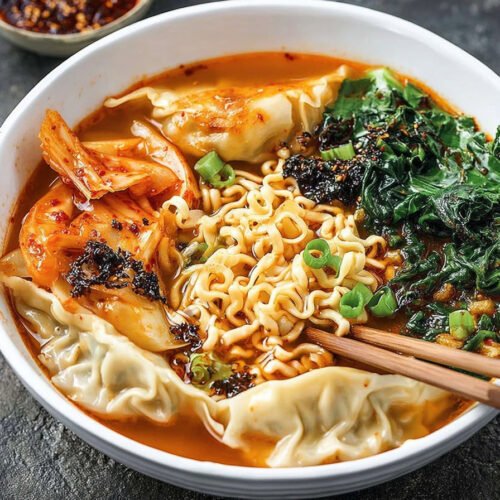
Korean Vegetarian Recipes Kimchi and Dumpling Noodle Soup
Ingredients
- 6 cups vegetable broth
- 1 cup kimchi with juice
- 2 tbsp kimchi juice (from the jar)
- 2 cloves garlic, minced
- 1 tbsp soy sauce
- 1 tsp sesame oil
- 1 pack dumplings (vegetarian)
- 200 g noodles (udon or ramen)
- 1 green onion, sliced
- 1 tsp gochugaru (Korean chili flakes)
- Salt to taste
Instructions
- Heat the vegetable broth in a large pot over medium heat.
- Add garlic, soy sauce, sesame oil, kimchi, and kimchi juice. Stir and let simmer for 10 minutes.
- Drop in the dumplings and cook until they float, about 6 to 8 minutes.
- Add the noodles and cook until tender, around 5 minutes.
- Taste and season with salt if needed. Sprinkle gochugaru for extra spice.
- Serve hot, topped with sliced green onions.
10) Nutrition
Serving Size: 1 bowl, Calories: 320, Carbohydrates: 45 g, Protein: 8 g, Fat: 10 g, Saturated Fat: 2 g, Sodium: 1100 mg, Fiber: 4 g, Sugar: 6 g
Written by Kathy from Simply Cooked Recipes



Leave a Comment