
1) What I Learned Testing Caprese Pasta Salad
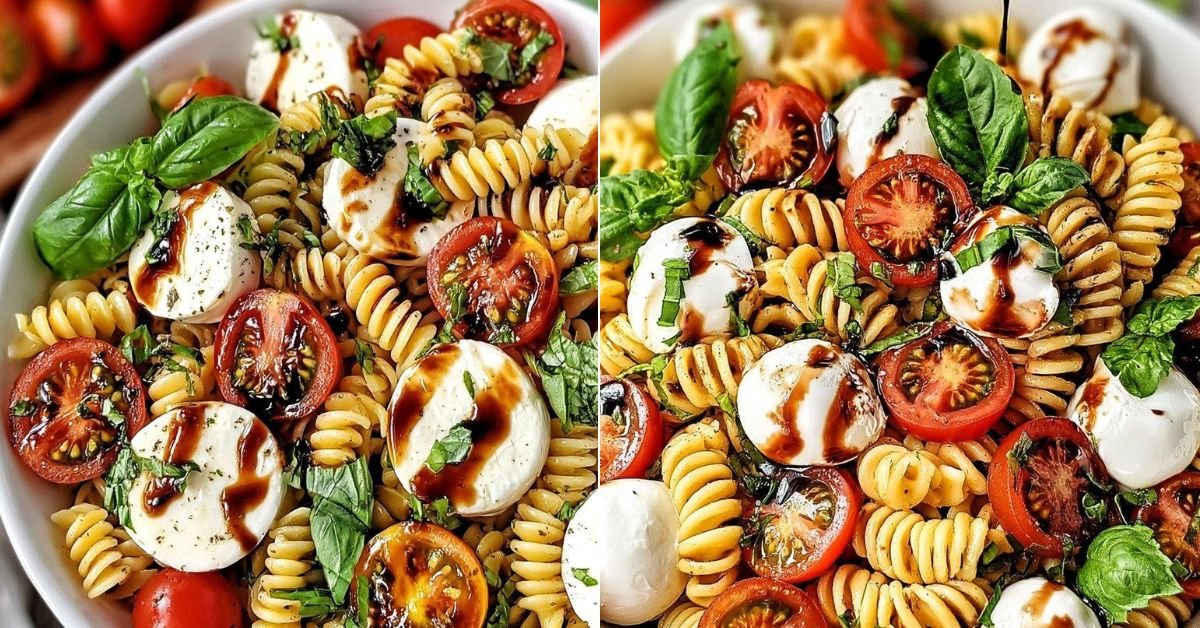
Pasta salad can look beautiful in the bowl and still taste flat, sticky, or watered down by the time it reaches the table. I’m Kathy, and my first few batches of Caprese Pasta Salad taught me that timing matters as much as ingredients. I tested when to cool the pasta, how to keep Cherry Tomatoes juicy without making the salad soggy, and when to drizzle the Balsamic Glaze. The discovery was simple but important: add the glaze right before serving. That one adjustment made this Summer Pasta Salad feel fresh, balanced, and calm enough for a family meal or a last-minute potluck.
Table of Contents
- 1) What I Learned Testing Caprese Pasta Salad
- 2) Key Takeaways
- 3) Easy Caprese Pasta Salad with Balsamic Glaze (20-Minutes) Recipe
- 4) Why Most Caprese Pasta Salad with Balsamic Glaze (20-Minutes) Recipes Fail
- 5) Ingredients for Caprese Pasta Salad with Balsamic Glaze (20-Minutes)
- 6) How to Make Caprese Pasta Salad with Balsamic Glaze (20-Minutes)
- 7) Recipe Card: Caprese Pasta Salad with Balsamic Glaze (20-Minutes)
- 8) Tips for Making Caprese Pasta Salad with Balsamic Glaze (20-Minutes)
- 9) Common Mistakes & Fixes
- 10) How to Tell Caprese Pasta Salad Has the Right Texture
- 11) Professional Secrets Behind Better Caprese Pasta Salad with Balsamic Glaze (20-Minutes)
- 12) Best Dishes or Pairings to Serve With Caprese Pasta Salad with Balsamic Glaze (20-Minutes)
- 13) Making Caprese Pasta Salad with Balsamic Glaze (20-Minutes) Ahead of Time
- 14) Storing Leftover Caprese Pasta Salad with Balsamic Glaze (20-Minutes)
- 15) FAQ (Real Cooking Questions)
- 16) Save This Caprese Pasta Salad with Balsamic Glaze (20-Minutes) Recipe
- 17) Conclusion
- 18) Nutrition
2) Key Takeaways
- Cool the pasta quickly: Rinsing stops the cooking and keeps rotini, penne, or bowtie pasta from clumping in the bowl.
- Add the Balsamic Glaze last: Drizzling it just before serving keeps the salad bright instead of dark, wet, or over-dressed.
- Use fresh basil gently: Tearing or chopping it right before mixing protects its aroma and keeps the flavor clean.
- Season after tossing: Salt draws moisture from Cherry Tomatoes, so final seasoning gives better control over texture and flavor.
3) Easy Caprese Pasta Salad with Balsamic Glaze (20-Minutes) Recipe
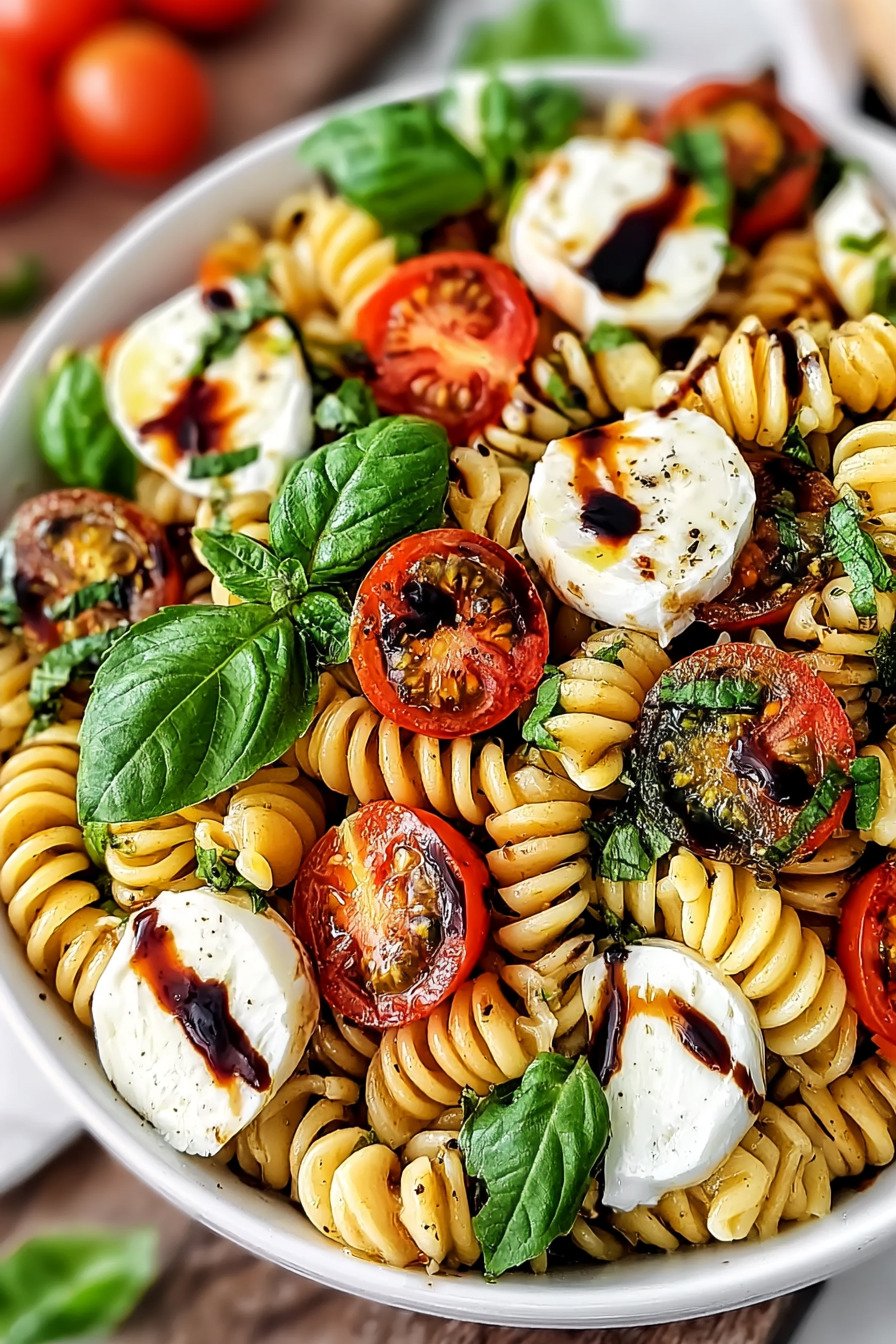
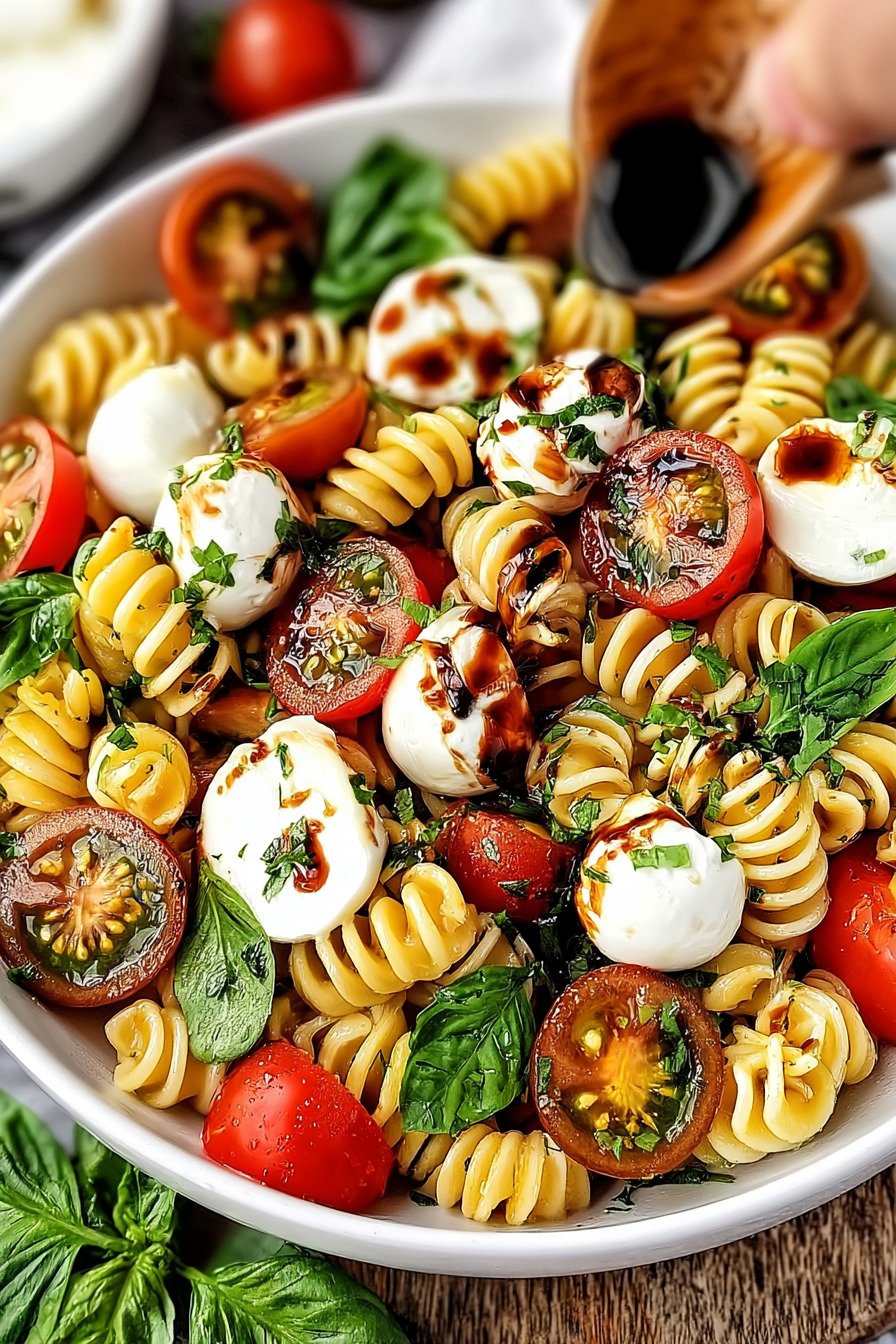
This Caprese Pasta Salad works because it treats a cold pasta salad differently from a hot pasta dish. The pasta is cooked until al dente, then cooled quickly so it stays firm and separate. The olive oil gives the pasta a light coating, the mozzarella adds a creamy bite, the tomatoes bring sweetness and acidity, and the basil gives the salad its fresh Caprese aroma. The Balsamic Glaze is reduced separately, cooled, and added at the end so it finishes the salad instead of soaking into it too early.
4) Why Most Caprese Pasta Salad with Balsamic Glaze (20-Minutes) Recipes Fail
Most Caprese Pasta Salad problems come from moisture and timing. If the pasta is overcooked, it absorbs dressing too quickly and turns soft after chilling. If it is not rinsed for a cold salad, the carryover heat can soften the mozzarella and wilt the basil. If the Cherry Tomatoes are salted too early, they release liquid into the bowl and make the salad taste diluted. If the Balsamic Glaze is poured on while warm, it can dull the basil and make the mozzarella feel too soft. This method avoids those problems by cooling the pasta, keeping the glaze separate until serving, and seasoning with control.
5) Ingredients for Caprese Pasta Salad with Balsamic Glaze (20-Minutes)
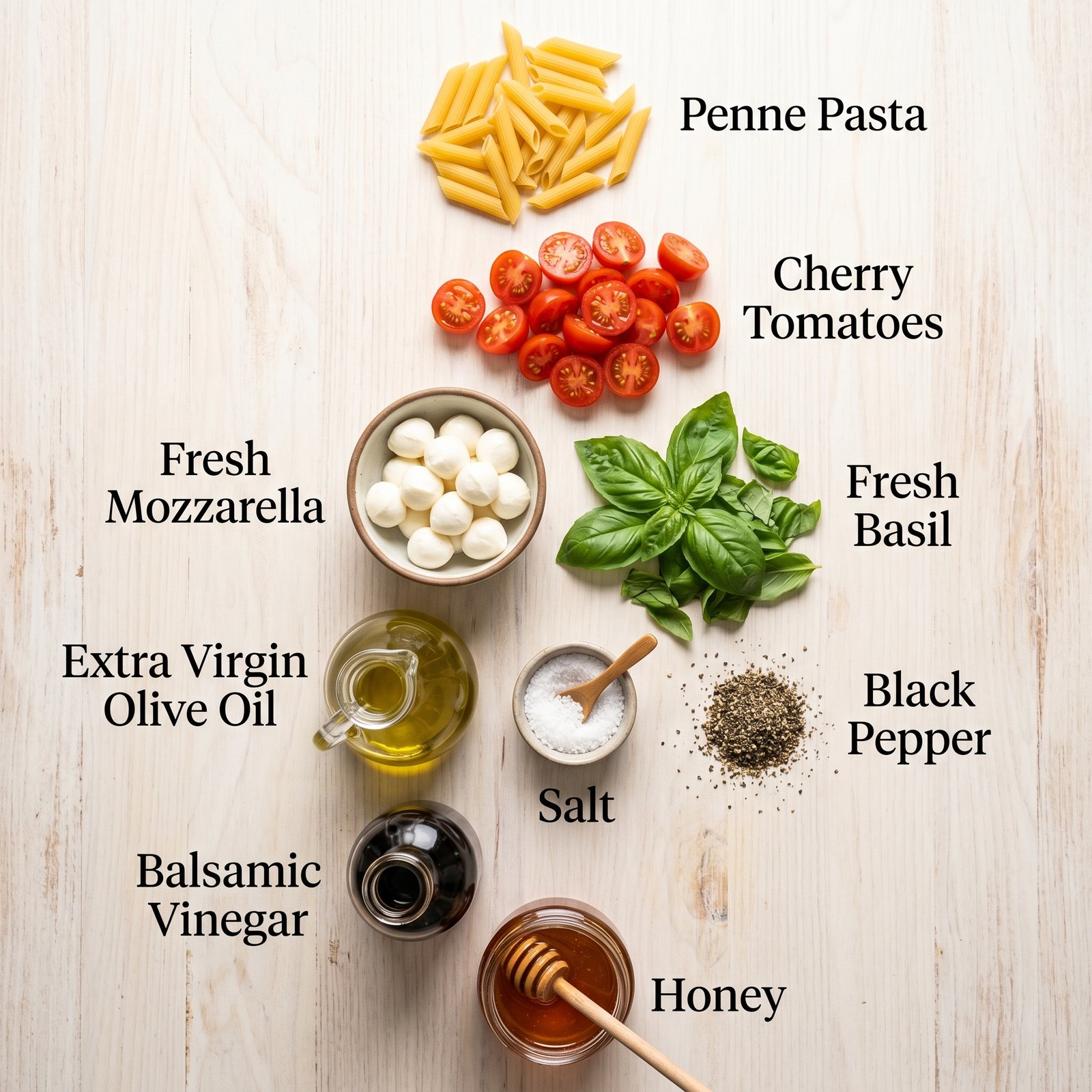
Pasta: Rotini, penne, or bowtie pasta works because the shapes hold small pockets of olive oil and glaze. Use it after boiling and cooling; if swapped for a very delicate pasta, the salad may break apart when tossed.
Cherry Tomatoes: Cherry Tomatoes add juicy sweetness and the fresh acidity that keeps this salad from tasting heavy. Halve them before mixing so their flavor spreads through the bowl, but avoid salting them too early because they can release extra liquid.
Fresh Mozzarella: Diced mozzarella or mozzarella balls give this Mozzarella Basil Pasta its creamy contrast. Keep it cool before mixing; if it gets too warm, it softens and loses its clean bite.
Fresh Basil: Basil is the aromatic ingredient that makes the salad taste like Caprese instead of plain pasta salad. Add it after the pasta is cooled so the leaves stay green, fragrant, and fresh.
Extra Virgin Olive Oil: Olive oil lightly coats the pasta and helps prevent dryness. Add it during assembly, not while the pasta is hot, so the salad tastes smooth rather than greasy.
Salt and Black Pepper: Salt sharpens the tomatoes and mozzarella, while black pepper adds gentle warmth. Season after tossing because the glaze and mozzarella both affect the final balance.
Balsamic Vinegar: Balsamic vinegar reduces into the glaze that gives this salad its sweet-tangy finish. Simmer it gently; boiling too hard can make it bitter or overly sticky.
Honey or Brown Sugar: Honey or brown sugar balances the vinegar and helps the glaze thicken. Use either one, but keep the amount measured so the glaze stays tangy instead of candy-sweet.
- Rotini vs penne vs bowtie: Rotini catches more glaze, penne gives a firmer bite, and bowtie looks pretty but should be cooked carefully so the centers do not stay too firm.
- Warm glaze vs cooled glaze: Warm glaze can wilt basil and soften mozzarella, while cooled glaze adds shine and flavor without damaging the fresh ingredients.
- Whole mozzarella balls vs diced mozzarella: Whole mini balls look polished, while diced mozzarella spreads creamy bites more evenly through the salad.
- Fresh basil vs dried basil: Fresh basil gives the salad its signature aroma; dried basil tastes flatter here and cannot give the same clean Caprese finish.
6) How to Make Caprese Pasta Salad with Balsamic Glaze (20-Minutes)
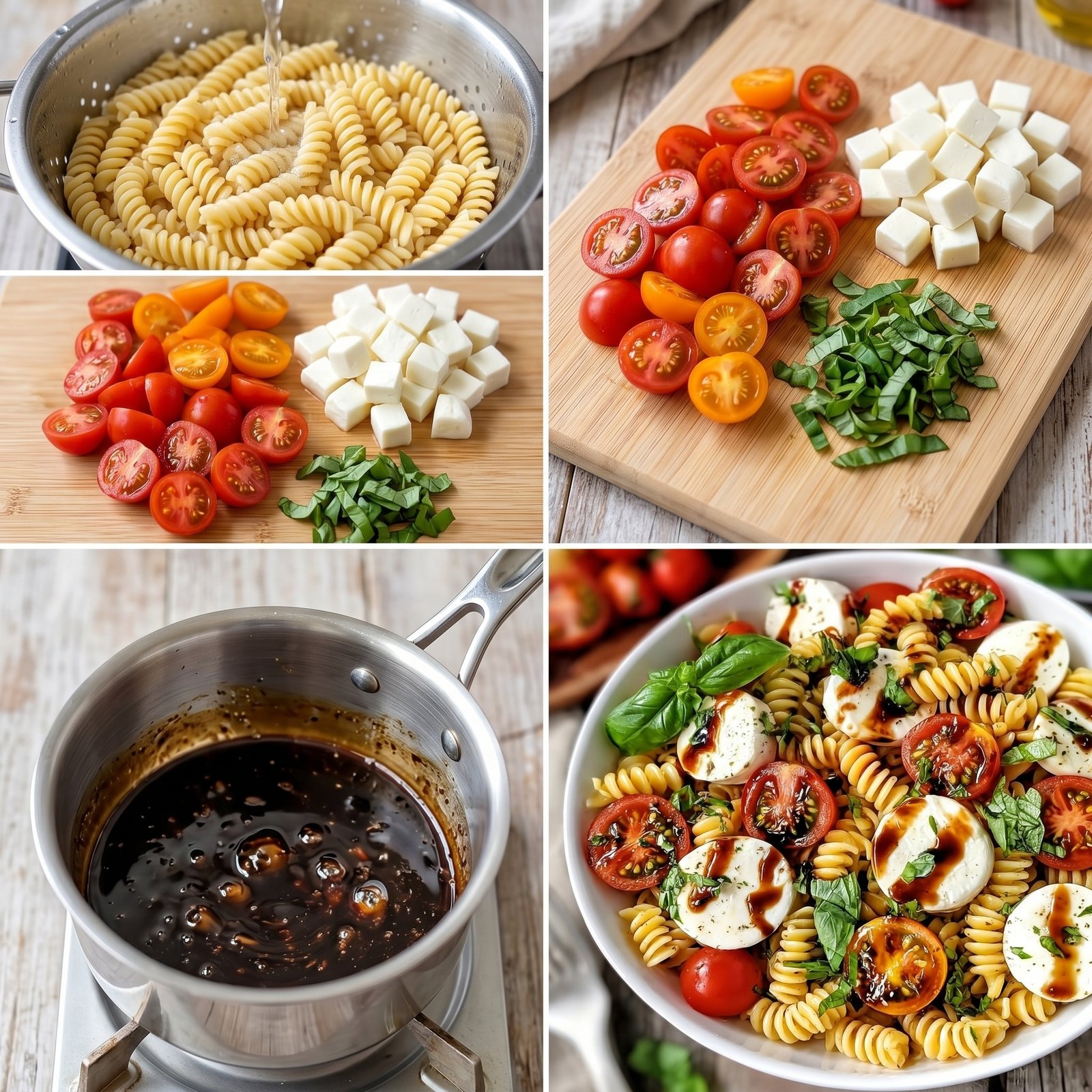
Step 1: Bring a large pot of salted water to a boil and cook the pasta until al dente. Drain it, then rinse under cold water so the pasta cools quickly, stops cooking, and does not stick together.
Step 2: While the pasta cools, halve the Cherry Tomatoes, chop or tear the basil, and dice the mozzarella or keep mini mozzarella balls whole. The pasta should feel cool before these fresh ingredients are added.
Step 3: Combine balsamic vinegar with honey or brown sugar in a small saucepan over medium heat. Simmer for 5 to 7 minutes until it thickens slightly and coats a spoon, then remove it from the heat and let it cool.
Step 4: Add the cooled pasta, tomatoes, mozzarella, and basil to a large bowl. Drizzle with extra virgin olive oil, season with salt and black pepper, and toss gently so the mozzarella stays intact and the basil does not bruise.
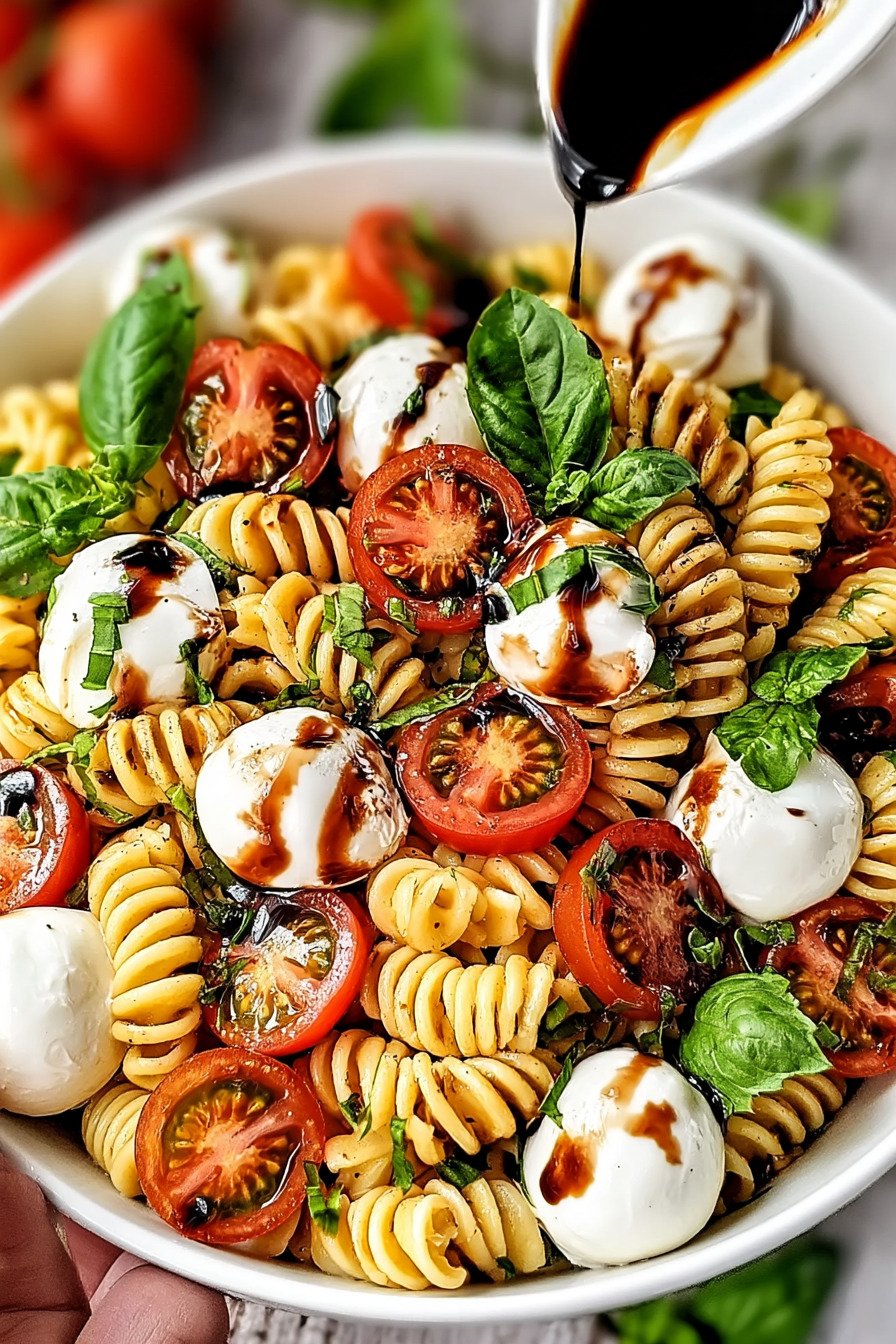
Step 5: Drizzle the cooled Balsamic Glaze over the salad just before serving. Toss lightly, stopping as soon as the glaze is distributed so the pasta stays colorful and the salad does not become heavy.
7) Recipe Card: Caprese Pasta Salad with Balsamic Glaze (20-Minutes)
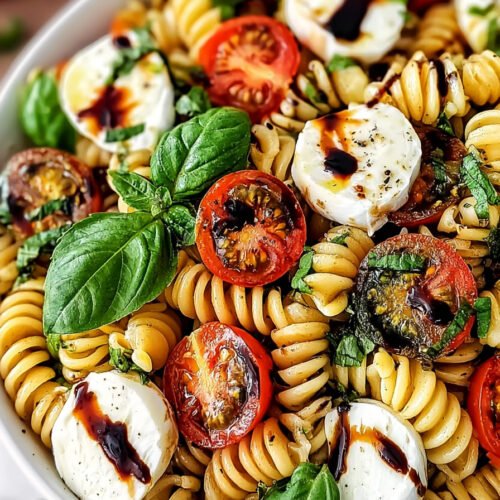
Caprese Pasta Salad with Balsamic Glaze (20-Minutes)
Ingredients
For the Salad
- 12 ounces pasta rotini, penne, or bowtie, cooked al dente so it holds shape after chilling
- 1 ½ cups cherry tomatoes halved, for juicy sweetness and fresh acidity
- 8 ounces fresh mozzarella diced or use mozzarella balls, kept cold until mixing for the best creamy texture
- ½ cup fresh basil chopped or torn, added fresh so the aroma stays bright
- 2 tablespoons extra virgin olive oil, to lightly coat the pasta and prevent dryness
- Salt and black pepper to taste, added gradually after tossing
For the Balsamic Glaze
- ½ cup balsamic vinegar, reduced until lightly syrupy and glossy
- 1 tablespoon honey or brown sugar, to balance the vinegar and help the glaze thicken
Instructions
- Bring a large pot of salted water to a boil. Cook the pasta according to the package directions until al dente, then drain and rinse under cold water to stop the cooking and keep the pieces from sticking together.
- While the pasta cools, halve the cherry tomatoes, chop or tear the basil leaves, and dice the mozzarella, or leave mini mozzarella balls whole if using them.
- In a small saucepan over medium heat, combine the balsamic vinegar and honey or brown sugar. Bring to a gentle simmer and cook for 5 to 7 minutes, stirring often, until the glaze thickens slightly and coats the back of a spoon. Remove from the heat and let it cool so it does not wilt the basil.
- In a large mixing bowl, combine the cooled pasta, cherry tomatoes, mozzarella, and basil. Drizzle with the extra virgin olive oil, season with salt and black pepper, and toss gently so the mozzarella stays intact and the basil does not bruise.
- Drizzle the cooled balsamic glaze over the salad just before serving. Toss lightly to distribute the sweet-tangy flavor without making the pasta look muddy or over-dressed.
8) Tips for Making Caprese Pasta Salad with Balsamic Glaze (20-Minutes)
Cook the pasta just to al dente because cold pasta firms slightly as it cools, and overcooked pasta turns soft once it sits with tomatoes and olive oil. Rinse only because this is a cold salad; for hot pasta, rinsing would remove helpful starch, but here it stops the cooking and prevents sticking. Let the Balsamic Glaze cool before adding it, because warm glaze can make the basil look tired and soften the mozzarella. Toss with a wide spoon or spatula instead of stirring aggressively, especially if using mozzarella balls. Taste after the glaze is added, then adjust salt and pepper at the end.
9) Common Mistakes & Fixes
Problem: The pasta salad tastes watery. Cause: The tomatoes were salted too early or the pasta was not drained well. Fix: Drain the pasta thoroughly, season closer to serving, and add the glaze at the end.
Problem: The basil turns dark or limp. Cause: The pasta or glaze was still warm when the basil was added. Fix: Cool both completely before assembling the salad.
Problem: The Balsamic Glaze tastes too sharp. Cause: It did not reduce long enough or the sweetener was not fully balanced. Fix: Simmer until lightly syrupy and taste once cooled, since glaze thickens and mellows as it rests.
Problem: The salad tastes bland after chilling. Cause: Cold pasta needs slightly more seasoning, and mozzarella can soften flavors. Fix: Taste before serving and refresh with a small pinch of salt, black pepper, or a light extra drizzle of glaze.
10) How to Tell Caprese Pasta Salad Has the Right Texture
Caprese Pasta Salad has the right texture when the pasta is cool, separate, and tender with a slight bite. The tomatoes should look juicy but should not create a puddle at the bottom of the bowl. The mozzarella should feel creamy and cool, not melted or mushy. The basil should smell fresh and peppery-sweet, not wilted. The Balsamic Glaze should cling lightly to the pasta and tomatoes without turning the whole salad dark. If the pasta looks swollen, sticky, or dull, it was likely overcooked or dressed too early.
11) Professional Secrets Behind Better Caprese Pasta Salad with Balsamic Glaze (20-Minutes)
The biggest restaurant-style secret for a simple salad like this is controlled layering. Instead of dumping everything together at once, each ingredient is protected: pasta is cooled, tomatoes are cut cleanly, mozzarella stays chilled, basil is added fresh, and glaze finishes the dish. Another small detail is reducing the glaze only until slightly thick, not until it becomes tacky. A glaze that is too thick sits in streaks, while a lightly syrupy glaze spreads through the salad and gives every bite a balanced sweet-tangy finish.
12) Best Dishes or Pairings to Serve With Caprese Pasta Salad with Balsamic Glaze (20-Minutes)
This Caprese Pasta Salad works well beside grilled chicken, turkey sandwiches, baked fish, garlic bread, or a simple green salad. For a cookout, it adds freshness next to smoky meats and richer sides. For lunch, it can stand on its own because the pasta and mozzarella make it filling without feeling heavy. As a Potluck Recipe, serve it in a wide bowl so the tomatoes, basil, mozzarella, and glaze are visible instead of buried at the bottom.
13) Making Caprese Pasta Salad with Balsamic Glaze (20-Minutes) Ahead of Time
For the best make-ahead result, prepare the pasta, tomatoes, mozzarella, basil, and olive oil mixture ahead, but keep the Balsamic Glaze separate until serving. If making this for Meal Prep, store portions in airtight containers and drizzle the glaze right before eating. The salad tastes freshest within the first day because basil is delicate and tomatoes release moisture as they sit. If preparing several hours ahead, add basil closer to serving for a cleaner aroma and brighter color.
14) Storing Leftover Caprese Pasta Salad with Balsamic Glaze (20-Minutes)
Store leftover Caprese Pasta Salad in an airtight container in the refrigerator for up to 3 days. The texture is best on the first and second day because tomatoes continue to release liquid over time. Stir gently before serving and taste for seasoning because cold pasta can mute salt and acidity. Freezing is not recommended; mozzarella changes texture, tomatoes collapse, and basil loses its fresh flavor. Leftovers can be served cold for lunch or spooned over greens for a quick Summer Pasta Salad bowl.
15) FAQ (Real Cooking Questions)
Can I use store-bought Balsamic Glaze? Yes, store-bought glaze works when you need a faster option. Taste it first because some brands are sweeter or thicker than homemade glaze, so drizzle lightly and add more only if needed.
Should I rinse pasta for Caprese Pasta Salad? Yes, for this cold pasta salad, rinsing helps stop the cooking and cools the pasta quickly. It also keeps the pieces from sticking before the olive oil and fresh ingredients are added.
Can I make this with regular tomatoes instead of Cherry Tomatoes? You can, but remove excess watery seeds if the tomatoes are very juicy. Cherry Tomatoes usually hold their shape better and give a sweeter, cleaner bite.
How do I keep basil from turning dark? Add basil only after the pasta and glaze have cooled. Tear or chop it close to assembly, and avoid crushing it with heavy stirring.
Can this Caprese Pasta Salad be served warm? It is designed as a cold or room-temperature salad. Warm pasta can soften the mozzarella and wilt the basil, so cooling the pasta gives a fresher texture.
16) Save This Caprese Pasta Salad with Balsamic Glaze (20-Minutes) Recipe
If this Caprese Pasta Salad helped you solve the problem of watery, dull pasta salad, save it for summer lunches, potlucks, and simple make-ahead meals. The key reminder is: cool the pasta fully and add the Balsamic Glaze right before serving.
17) Conclusion
Caprese Pasta Salad is simple, but the difference between fresh and flat comes down to small choices. Cook the pasta firmly, cool it quickly, protect the basil, keep the mozzarella chilled, and finish with glaze only when the salad is ready to serve. Once those details are handled, the recipe becomes bright, creamy, juicy, and reliable enough for a casual lunch or a full summer table.
18) Nutrition
Serving Size 1 portion Calories 315 Sugar 7 g Sodium 265 mg Fat 13 g Saturated Fat 5 g Carbohydrates 38 g Fiber 2 g Protein 12 g Cholesterol 25 mg
Leave a Comment