
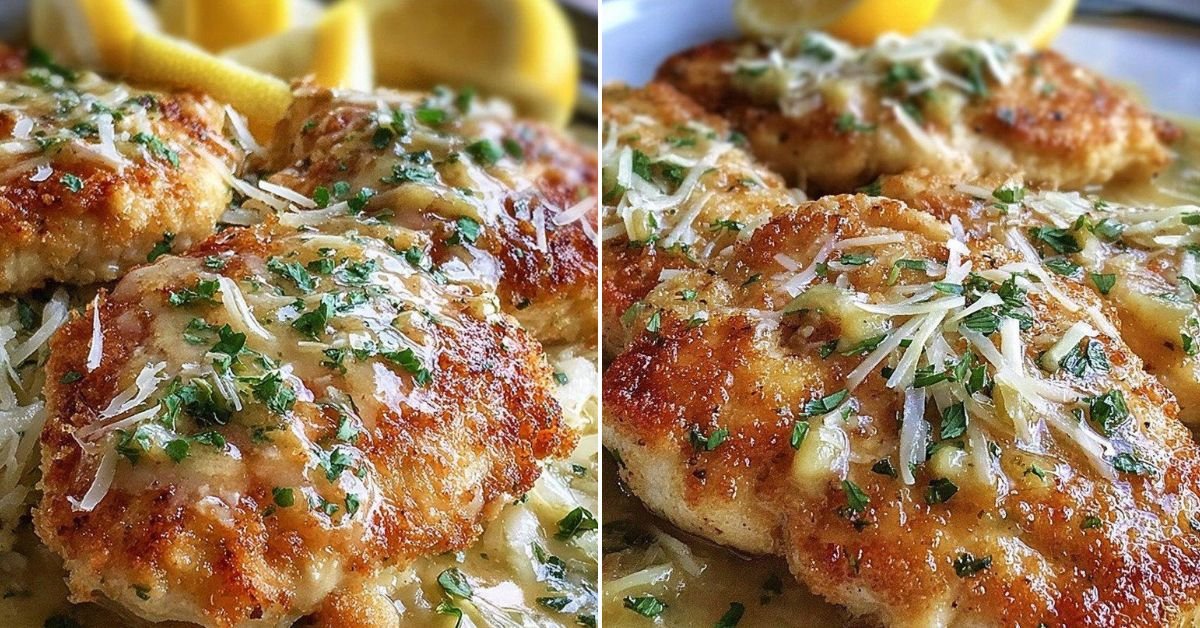
You know what? I’ve made this lemon chicken Romano pasta at least a dozen times, and it never gets old. There’s something about that bright, zesty lemon paired with savory Romano cheese that just works magic on your taste buds. I stumbled onto this recipe during a particularly hectic weeknight when I needed something quick but impressive, and let me tell you, it’s been my secret weapon ever since. What I love most is how versatile it is. You can use boneless skinless chicken breast recipes as your base, but I’ve also thrown it in the air fryer when I’m feeling lazy (air fryer recipes chicken are seriously underrated). Some nights I go full baked chicken breast recipes mode in the oven, other times I toss everything together for those beloved baked pasta recipes we all crave. Heck, I’ve even swapped the Romano for Parmesan and turned it into one of my go-to Alfredo pasta recipes. The point is, this dish adapts to whatever boneless chicken recipes mood you’re in. The best part? Your kitchen will smell absolutely incredible. That lemony aroma mixed with garlic and herbs? Pure heaven. My neighbor actually knocked on my door once asking what I was cooking. Now she makes it too.
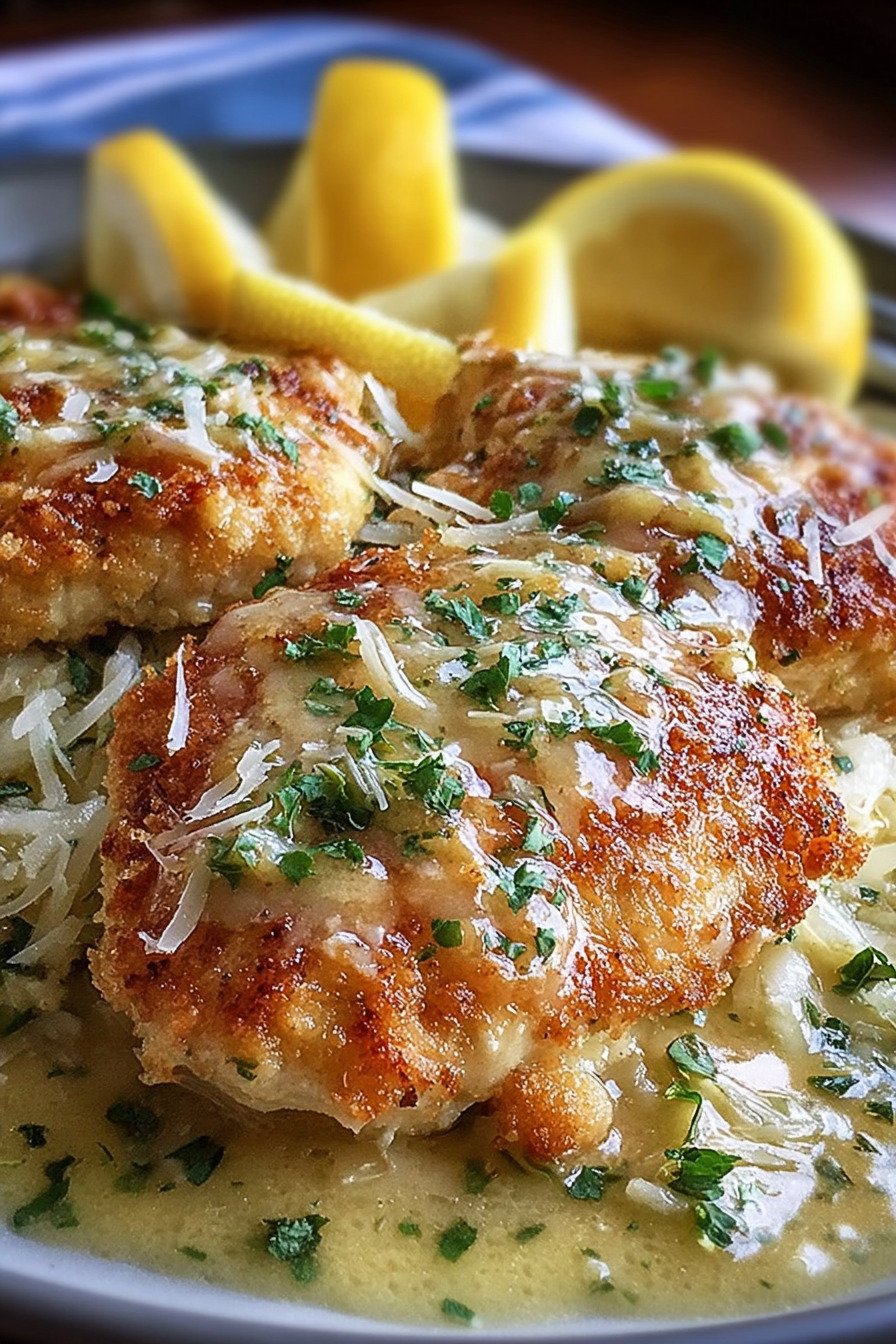
Table of Contents
- 1) Key Takeaways
- 2) Easy Lemon Chicken Romano Pasta Recipe
- 3) Ingredients for Lemon Chicken Romano Pasta
- 4) How to Make Lemon Chicken Romano Pasta
- 5) Tips for Making Lemon Chicken Romano Pasta
- 6) Making Lemon Chicken Romano Pasta Ahead of Time
- 7) Storing Leftover Lemon Chicken Romano Pasta
- 8) Try these Main Course next!
- 9) Lemon Chicken Romano Pasta
- 10) Nutrition
1) Key Takeaways
- What makes lemon chicken Romano pasta so flavorful?
- Can you make this recipe ahead of time for meal prep?
- What’s the best way to keep the sauce creamy when reheating?
- How do you prevent the pasta from getting mushy in this dish?

2) Easy Lemon Chicken Romano Pasta Recipe
Listen, I’ve tried a lot of chicken pasta recipes in my day, and this one right here? It’s become my absolute go-to weeknight dinner. When I first made it, I was honestly just throwing things together from what I had in my fridge, but somehow it turned into this gorgeous, restaurant-quality meal that my family begs me to make at least twice a month. The lemon brings this bright, fresh zing that cuts through the richness of the cream and cheese, and trust me, it’s addictive.
What I really appreciate about chicken pasta recipes like this one is how forgiving they are. You can literally adapt them to whatever cooking method you’re in the mood for. Some nights I go the traditional stovetop route, other nights I’ll prep everything and turn it into one of those cozy baked pasta recipes that bubble away in the oven while I catch up on my shows. My sister even figured out how to make the chicken in her air fryer (air fryer recipes chicken have seriously changed her life), and it works like a charm.
The Romano cheese is what really sets this apart from your typical Alfredo pasta recipes. It’s got this sharper, more complex flavor than Parmesan, and when it melts into that lemony cream sauce? Magic. Pure magic. I’ve served this to friends who claimed they didn’t like “fancy” pasta dishes, and they scraped their plates clean. One of them even asked if I went to culinary school, which made me laugh out loud.
Here’s the thing about boneless skinless chicken breast recipes: they can be boring if you don’t treat them right. But when you sear that chicken until it’s golden and then let it soak up all those garlicky, lemony flavors? Game over. This is hands down one of the best boneless chicken recipes I’ve ever made, and I’m not being dramatic. The fact that it comes together in about 40 minutes is just the cherry on top.

3) Ingredients for Lemon Chicken Romano Pasta
Boneless, Skinless Chicken Breasts: I like cutting these into bite-sized pieces because they cook faster and get more surface area for that gorgeous golden crust. You could totally use chicken thighs if you prefer dark meat, but I find breasts work perfectly here. They stay tender and juicy when you don’t overcook them, which is key. Just season them well and don’t be shy with that salt and pepper.
Pasta: I usually grab penne or rigatoni for this recipe because those ridges and tubes hold onto the sauce like nobody’s business. But honestly? Use whatever pasta shape makes you happy. I’ve made this with farfalle when that’s all I had, and it was still delicious. The important thing is cooking it al dente so it doesn’t turn mushy when you toss it with the sauce. Nobody wants sad, overcooked noodles.
Olive Oil: Good quality olive oil makes a difference here since you’re using it to sear the chicken and sauté the garlic. I’m not saying you need to break the bank on some fancy imported stuff, but don’t use the cheapest bottle on the shelf either. Find something in the middle that you’d actually enjoy drizzling on bread.
Garlic: Four cloves might seem like a lot, but garlic is one of those ingredients where more is more, you know? I mince mine pretty fine so it distributes evenly through the sauce. Fresh garlic is way better than the jarred stuff here. The flavor is just brighter and more pronounced. Plus, your kitchen will smell incredible while it’s cooking.
Chicken Broth: This is the base of your sauce, so use good stuff. I keep boxes of low-sodium chicken broth in my pantry at all times. Low sodium is better because it gives you control over the salt level in your final dish. If you only have regular broth, just go easy on adding extra salt later.
Heavy Cream: Yeah, we’re going there. This isn’t the time to substitute with milk or half-and-half unless you really need to. Heavy cream gives you that luscious, silky texture that coats every piece of pasta. I promise you it’s worth it. You’re not eating this every single night, so live a little.
Lemons: You need both the zest and the juice from two whole lemons. This is where the recipe gets its personality. The zest has all those aromatic oils that smell like sunshine, and the juice brings that tart, bright acidity that balances the richness. Don’t skip zesting them first before you juice, because trying to zest an already-juiced lemon is basically impossible.
Romano Cheese: This is your star player. Romano is sharper and saltier than Parmesan, with this slightly tangy bite that plays beautifully with the lemon. I buy a wedge and grate it myself because pre-shredded cheese has that anti-caking powder that prevents it from melting smoothly. Grating it takes like two minutes, and the difference is totally noticeable.
Butter: Just a couple tablespoons, but it adds this richness and helps the sauce come together into something glossy and gorgeous. Butter also helps with the emulsification, which is a fancy way of saying it keeps your sauce from looking broken or separated. I always use unsalted butter so I can control the salt level myself.
Italian Seasoning: This is my lazy person’s shortcut to getting that perfect herb blend. It usually has basil, oregano, thyme, and sometimes rosemary. You could absolutely use fresh herbs if you’re feeling ambitious, but I’m being real with you here: dried Italian seasoning works great and it’s what I use 90% of the time.
Red Pepper Flakes: These are optional, but I almost always throw them in. Just a little pinch gives the sauce this subtle warmth that doesn’t make it spicy, just more interesting. If you’re cooking for kids or people who really can’t handle any heat at all, leave them out. But if you’re on the fence, try just a quarter teaspoon. You can always add more at the table.
Fresh Parsley: This is purely for looks and a little fresh herb flavor at the end. I chop it up and sprinkle it on top right before serving. It makes the dish look restaurant-pretty, which is fun when you’re serving guests. If you don’t have parsley, don’t stress about it. The dish is delicious with or without the garnish.
4) How to Make Lemon Chicken Romano Pasta
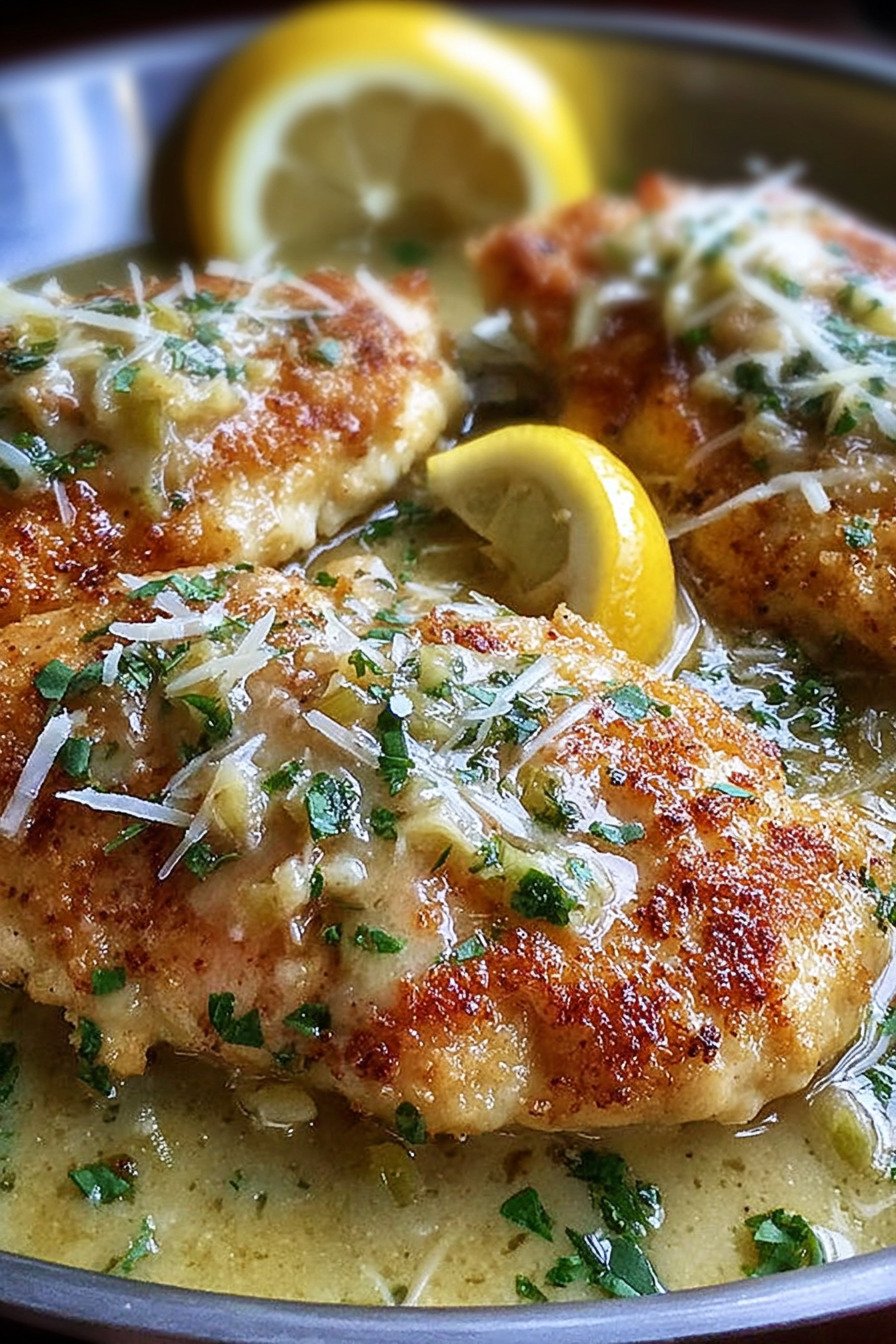
Step 1: Get your pasta water going first. Fill up a big pot with water, salt it generously (like you’re seasoning the ocean, as my grandmother used to say), and bring it to a rolling boil. Once it’s bubbling away, add your pasta and cook it according to the package directions until it’s al dente. This usually takes somewhere between 8 and 12 minutes depending on what shape you’re using. Before you drain it, scoop out a cup of that starchy pasta water and set it aside. You might need it later to loosen up your sauce.
Step 2: While the pasta is doing its thing, prep your chicken. Cut those chicken breasts into bite-sized chunks, maybe about an inch or so. You want them all roughly the same size so they cook evenly. Season them well on all sides with salt, pepper, and that Italian seasoning. Don’t be timid here. The seasoning is what’s going to give your chicken actual flavor, so really get in there and coat every piece.
Step 3: Heat up a large skillet over medium-high heat and add about two tablespoons of olive oil. Let it get hot until it shimmers a bit. Then add your seasoned chicken pieces in a single layer. Don’t overcrowd the pan or they’ll steam instead of getting that nice golden crust. Cook them for about 5 or 6 minutes, flipping them around so all sides get some color. You want them cooked through but not dried out. Once they’re done, transfer them to a plate and set them aside.
Step 4: In that same skillet (don’t you dare wash it, all those brown bits are flavor!), add your remaining tablespoon of olive oil and your butter. Once the butter melts and stops foaming, toss in your minced garlic. Sauté it for maybe 30 seconds, just until it smells amazing. Watch it carefully because garlic can go from perfect to burned in about three seconds flat, and burned garlic is bitter and gross.
Step 5: Pour in your chicken broth, lemon juice, and lemon zest. Use a wooden spoon to scrape up all those gorgeous brown bits stuck to the bottom of the pan. That’s called deglazing, and it’s where a ton of flavor lives. Let this mixture bubble away for about 3 minutes so it reduces down and concentrates the flavors a bit. You should see it thicken slightly.
Step 6: Turn your heat down to medium-low and stir in that heavy cream. Let the whole thing simmer gently for another 2 or 3 minutes. You’ll see it start to thicken up into an actual sauce. Don’t let it boil hard or the cream might break. Just a gentle simmer is perfect. This is when I usually steal a taste to see if it needs more salt or lemon.
Step 7: Now comes the fun part. Remove the skillet from the heat and add your grated Romano cheese. Stir it in gradually until it melts completely and the sauce becomes smooth and glossy. If your sauce looks too thick at this point, add some of that reserved pasta water a little bit at a time until it reaches the consistency you want. The starch from the pasta water helps everything come together beautifully.
Step 8: Add your cooked chicken back into the skillet and toss it around in the sauce so every piece gets coated. Then add your drained pasta and toss everything together until the pasta is completely covered in that gorgeous lemony, cheesy sauce. Give it a final taste and adjust the seasoning if needed. Maybe it needs another squeeze of lemon, or a bit more salt, or those red pepper flakes if you skipped them earlier.
Step 9: Serve this beauty up right away while it’s hot and the sauce is at its creamiest. Garnish each plate with some fresh chopped parsley and extra grated Romano cheese. I like to put the cheese grater right on the table so people can add as much as they want. A few cracks of fresh black pepper on top doesn’t hurt either.
5) Tips for Making Lemon Chicken Romano Pasta
Don’t Overcook That Chicken: This is probably the biggest mistake people make with chicken breast recipes. The second your chicken reaches 165°F internally, take it off the heat. If you keep cooking it, it’ll turn into dry, rubbery sadness. I actually pull mine off around 160°F and let it rest for a minute, because carryover cooking will bring it up to 165°F. A meat thermometer is your best friend here. They’re like ten bucks and will change your life.
Fresh Lemon is Non-Negotiable: I know it’s tempting to reach for that bottle of lemon juice in your fridge, but please don’t. Fresh lemon juice and zest have this brightness and aromatic quality that bottled stuff just can’t match. The oils in the zest especially are what make this dish smell and taste so good. If you absolutely must use bottled juice in a pinch, at least try to find some lemon zest somewhere.
Grate Your Own Cheese: I mentioned this earlier but it’s worth repeating. Pre-shredded cheese is coated in cellulose (basically wood pulp) to keep it from clumping in the bag. That same coating prevents it from melting smoothly into your sauce. You’ll end up with a grainy, separated mess instead of a silky, creamy dream. Buy a wedge of Romano, grate it yourself, and thank me later.
Save That Pasta Water: I can’t stress this enough. That starchy water is liquid gold for bringing your sauce together. The starch acts as a natural thickener and helps the sauce cling to your pasta instead of sliding off. I always save at least a cup, even if I don’t end up using all of it. Better to have it and not need it than need it and not have it, right?
Temperature Control Matters: When you add the cream, keep your heat on medium-low. If you blast it on high, the cream can break and get grainy. Same goes for when you add the cheese. Take the pan off the heat completely before stirring in that Romano. Cheese can seize up and get stringy if it hits too much direct heat. Low and slow wins the race here.
Season at Every Step: Don’t just season your chicken and call it a day. Taste your sauce before you add the pasta and adjust the seasoning. Taste it again after everything’s combined. Building flavor in layers like this is how you get a dish that tastes complex and well-balanced instead of flat and boring. Salt, acid (from the lemon), and fat (from the cream and cheese) should all be in harmony.
6) Making Lemon Chicken Romano Pasta Ahead of Time
I make this ahead all the time for meal prep, and it works beautifully. The key is knowing what to do and what not to do. You can absolutely cook everything through completely and store it in the fridge. The flavors actually meld together even more after sitting overnight, which is a nice bonus. Just know that the sauce will thicken up considerably as it cools down and sits.
When you’re ready to reheat it, put it in a skillet over medium-low heat and add a good splash of chicken broth, cream, or even milk to loosen everything back up. You want to bring it back to that silky, sauce-coated-pasta consistency, not a thick, dry clump. Stir it gently as it warms up, and give it a taste. You’ll probably want to brighten it up with a fresh squeeze of lemon juice and maybe a pinch more salt.
If you’re making this for a dinner party or potluck situation, I’d suggest cooking the chicken and making the sauce ahead of time, but cooking the pasta fresh the day of. Pasta always tastes better when it’s freshly cooked, and this way you can toss everything together right before serving. Keep the cooked chicken and sauce in separate containers in the fridge for up to three days.
Another trick I love is cooking a double batch and freezing half for later. The sauce freezes really well for up to two months. Just let it thaw in the fridge overnight and reheat it gently with a bit of extra liquid. Cook fresh pasta when you’re ready to eat, toss it with the reheated sauce, and boom. Dinner is served with minimal effort. This is one of those dishes that’s almost better as leftovers because all those flavors have time to really get to know each other.
7) Storing Leftover Lemon Chicken Romano Pasta
Leftovers will keep in an airtight container in your fridge for about 3 to 4 days. I usually portion mine out into individual containers right away so I can just grab one for lunch during the week. Make sure you let the pasta cool down to room temperature before you seal it up and stick it in the fridge, or you’ll get condensation that makes everything soggy.
When it comes time to reheat, you’ve got options. The microwave is the fastest route, but you need to do it right. Put your portion in a microwave-safe bowl, add a tablespoon or two of milk or broth, cover it loosely, and heat it in 30-second intervals, stirring between each one. This prevents hot spots and keeps the sauce from breaking. Don’t just zap it on high for three minutes straight unless you want a dried-out disaster.
I actually prefer reheating this on the stovetop when I have the time. Put it in a small skillet over medium-low heat with a splash of liquid and stir it gently until it’s heated through. This method brings back that creamy texture way better than the microwave ever could. The pasta stays more al dente too, instead of turning mushy. It takes maybe five extra minutes but it’s worth it.
Can you freeze this? Technically yes, but I’m going to be honest with you: cream-based pasta sauces don’t always freeze great. The texture can get a little grainy when you thaw and reheat them. If you do want to freeze leftovers, do it within a day or two of making it fresh, and store it in a freezer-safe container for up to a month. Thaw it overnight in the fridge and reheat it with extra cream to bring back that silky texture. It won’t be quite as perfect as fresh, but it’s still pretty darn good.
8) Try these Main Course next!
9) Lemon Chicken Romano Pasta
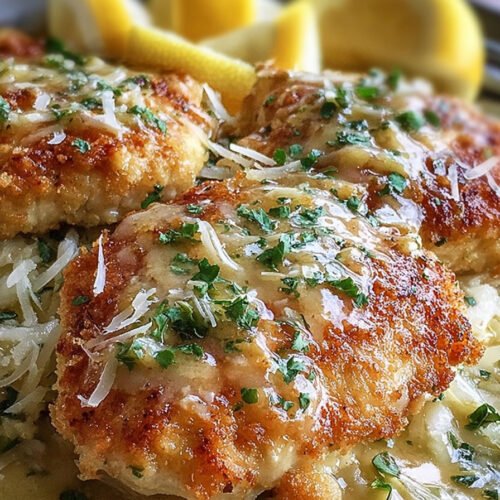
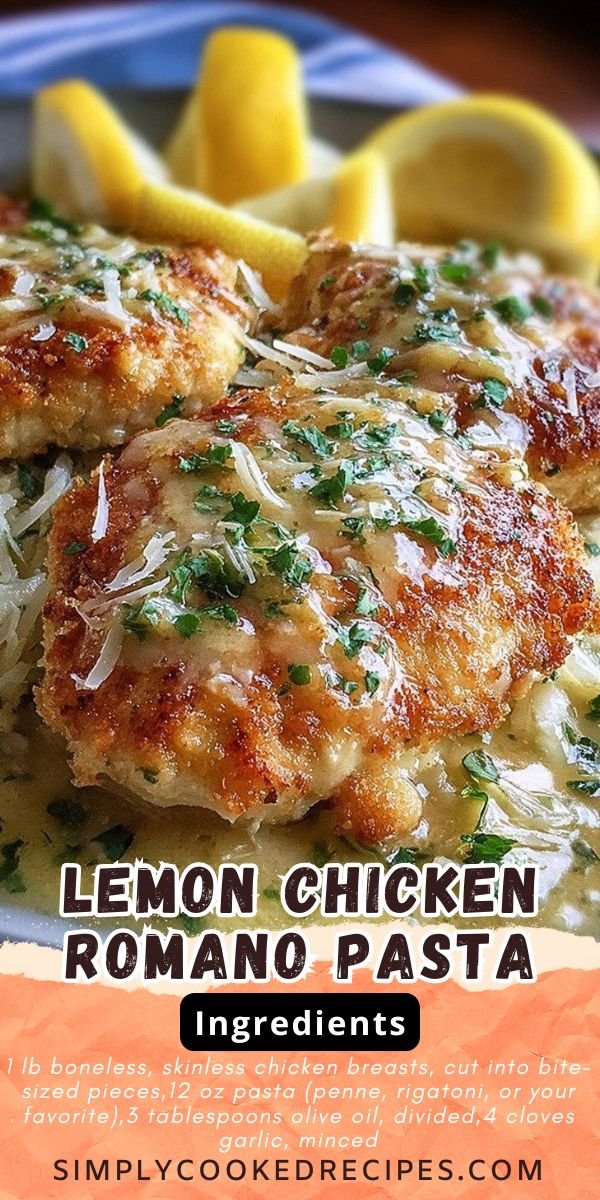
Lemon Chicken Romano Pasta – Easy Chicken Pasta Recipes
Ingredients
- 1 lb boneless, skinless chicken breasts, cut into bite-sized pieces
- 12 oz pasta (penne, rigatoni, or your favorite)
- 3 tablespoons olive oil, divided
- 4 cloves garlic, minced
- 1 cup chicken broth
- 1/2 cup heavy cream
- Zest of 2 lemons
- 1/4 cup fresh lemon juice
- 3/4 cup grated Romano cheese
- 2 tablespoons butter
- 1 teaspoon Italian seasoning
- 1/2 teaspoon red pepper flakes (optional)
- Salt and black pepper to taste
- Fresh parsley, chopped for garnish
- Extra Romano cheese for serving
Instructions
- Bring a large pot of salted water to boil and cook pasta according to package directions until al dente. Drain and set aside, reserving 1 cup of pasta water.
- While the pasta cooks, season chicken pieces generously with salt, pepper, and Italian seasoning.
- Heat 2 tablespoons of olive oil in a large skillet over medium-high heat. Add the chicken pieces and cook for about 5-6 minutes, turning occasionally, until golden brown and cooked through. Remove chicken from the skillet and set aside.
- In the same skillet, add the remaining tablespoon of olive oil and butter. Once melted, add minced garlic and sauté for about 30 seconds until fragrant (don’t let it burn!).
- Pour in the chicken broth, lemon juice, and lemon zest. Bring to a simmer and let it reduce for about 3 minutes, scraping up any browned bits from the bottom of the pan.
- Lower the heat to medium-low and stir in the heavy cream. Let it simmer gently for 2-3 minutes until slightly thickened.
- Add the grated Romano cheese and stir until melted and smooth. If the sauce seems too thick, add some reserved pasta water a little at a time.
- Return the cooked chicken to the skillet and toss to coat in the sauce. Add the cooked pasta and toss everything together until well combined.
- Taste and adjust seasoning with more salt, pepper, or lemon juice if needed. If you like a little kick, sprinkle in those red pepper flakes.
- Serve immediately, garnished with fresh chopped parsley and extra Romano cheese. Trust me, don’t skip the extra cheese!
10) Nutrition
Serving Size: 1/4 of the recipe | Calories: 612 | Sugar: 3.2 g | Sodium: 745 mg | Fat: 28.5 g | Saturated Fat: 12.8 g | Carbohydrates: 52.4 g | Fiber: 2.8 g | Protein: 38.6 g | Cholesterol: 118 mg





Leave a Comment